Water Leak Detection Services in Jacksonville, FL — Available 24/7
Northeast Florida Water Leak Detection for Homes, Businesses & Managed Properties
An unusually high water bill. A damp baseboard. The sound of running water when every faucet is off. When you need water leak detection in Jacksonville, FL, you need answers—not guesswork about where to open a wall or dig up the yard.
Cummer Jack Plumbing helps homeowners, businesses, HOAs, and facility managers investigate hidden plumbing leaks and understand their next steps. Established in 2010, our team of 60 skilled professionals and fleet of six equipped service vans support residential and commercial plumbing needs throughout Jacksonville and surrounding communities.
Whether you suspect a leaking toilet, an underground supply line, or a pipe beneath the slab, start with a clear conversation about the symptoms, access, and appropriate investigation.
- Investigations for unexplained water usage and concealed plumbing leaks
- Residential, commercial, and multi-unit property support
- Clear separation between diagnostic work and additional repairs
- 24/7 availability for urgent plumbing concerns
Call for scheduling, urgent plumbing assistance, and an explanation of the proposed service.
Request Water Leak Detection
Fill out the form and we'll contact you immediately!
Local Leak Investigation Backed by 16 Years of Plumbing Experience
Practical Answers Before Major Repair Decisions
A suspected leak can leave you facing several questions at once: Is water actually escaping? Which plumbing system is involved? Will finding it require opening the floor? Does the estimate include repair?
Cummer Jack Plumbing approaches those questions as connected decisions. Our broader plumbing service capabilities allow the investigation to lead into a discussion of corrective options, rather than leaving you with an unexplained wet area and no clear plan.
Our service approach emphasizes:
- Local plumbing service established in 2010
- A 60-person team supporting residential and commercial work
- Six equipped service vans serving Jacksonville and surrounding areas
- Around-the-clock availability for urgent calls
- Clear communication about findings, limitations, and additional work
Hidden Water Leak Detection for Jacksonville Neighborhoods & Business Corridors
Serving Properties Around Riverside, Mandarin, Arlington & the Westside
A leak investigation should reflect the property—not simply its ZIP code. A restaurant near a busy commercial corridor, an apartment community in Baymeadows, and a home in Murray Hill can present very different access and operating requirements.
From our Lane Avenue North location, Cummer Jack Plumbing supports customers across Jacksonville. Tell us about gated access, occupied units, operating hours, known shutoff locations, and previous plumbing work so the visit can be planned around your property.
- Jacksonville neighborhoods: Riverside, Murray Hill, Mandarin, Arlington Hills, Oceanway, Sandalwood, Cedar Hills, and Baymeadows
- Surrounding communities: Orange Park, Atlantic Beach, Neptune Beach, Jacksonville Beach, Ponte Vedra Beach, and Yulee
- Local reference points: Cummer Museum of Art & Gardens, St. Johns Town Center, the riverwalks, and major commercial corridors
Call with your address to discuss scheduling and property access.
Professional Hidden Leak Detection for Complex Plumbing Problems
Focused Investigation for Supply Lines, Slab Leaks & Concealed Moisture
Painting over a stain or replacing damaged flooring does not identify why water appeared. Effective investigation separates symptoms from the plumbing condition that may be causing them.
Our focus is to establish the likely water source, narrow the affected area, and explain what additional access or testing may be necessary. Different situations require different methods; no single instrument provides a complete answer for every property.
- Review water-use history and reported symptoms
- Distinguish indoor supply plumbing from irrigation and other water uses
- Assess available isolation points and accessible pipework
- Explain evidence supporting the findings
- Discuss further investigation before approving destructive access
For commercial properties, access coordination and operational requirements are part of that planning.
Why Is My JEA Water Bill High When I Cannot Find a Leak?
A High Bill Is a Reason to Investigate—Not Proof of a Slab Leak
Unexpected consumption can come from running toilets, dripping fixtures, irrigation problems, outdoor leaks, or other water-using equipment. JEA identifies these among common sources of unexplained usage and offers alerts that can help customers recognize unusual patterns.
Concealed leaks may also occur beneath flooring, inside walls, or along buried supply lines. However, a bill alone cannot establish the location or cause.
Warning signs worth investigating include:
- Water usage that rises without an understandable change
- Running-water sounds when fixtures should be off
- Recurring dampness, staining, or softened materials
- A persistently wet outdoor area
- Repeated fixture refilling or unexplained equipment operation
For a business, unresolved water loss may also disrupt customer areas, tenant spaces, storage, or daily operations. Early investigation helps establish what action is actually needed.
Prevent Hidden Water Loss With Regular Plumbing Checks
A Practical Maintenance Plan Without Unnecessary Certification Claims
Routine observations can help identify changes before they become major disruptions. Leak detection itself is not a universal annual certification requirement for every Jacksonville property. Inspection frequency should reflect the building, equipment, previous failures, and any separately applicable maintenance obligations.
| Maintenance Task | What It Involves | Useful Timing | Practical Value |
|---|---|---|---|
| Visual inspection | Check accessible plumbing for drips, staining, corrosion, and damaged connections | During routine property checks | Identifies visible changes |
| Usage review | Compare consumption with occupancy and known water uses | Each billing cycle | Helps reveal unexplained trends |
| Fixture checks | Look for running toilets and leaking faucets or spigots | Regularly and after an alert | Finds common sources of waste |
| Targeted investigation | Examine persistent or unexplained symptoms | When evidence warrants it | Narrows the suspected source |
| Documentation | Retain findings, photographs, and repair invoices | After service | Supports future maintenance decisions |
Seasonal planning:
- Check irrigation when watering schedules change
- Inspect exposed plumbing after cold-weather damage is suspected
- Review seasonal equipment and occupancy changes before attributing higher usage to a leak
Service frequency depends on the property; continuous monitoring and targeted investigation serve different purposes. Keep access clear, retain prior records, and address recurring symptoms rather than repeatedly covering them.
Who Needs Water Leak Detection in Jacksonville?
From Single-Family Homes to Busy Commercial Facilities
Homeowners need understandable answers. Property managers need coordinated access. Business owners need an investigation that accounts for operating hours and affected areas.
Cummer Jack Plumbing supports a range of property needs:
Residential
Homes, townhouses, and rental properties
Food Service
Restaurants, cafés, and commercial kitchens
Commercial
Offices, retail centers, and mixed-use buildings
Institutional
Schools, churches, and community facilities
Medical
Medical and dental premises
Multi-Unit
Apartments, condominiums, and HOA-managed properties
Industrial
Warehouses and industrial facilities
When booking commercial plumbing service, identify any restricted spaces, specialized equipment, or site safety requirements. That information helps define the appropriate scope before work begins.
How Jacksonville Usage Patterns Can Complicate a Leak Diagnosis
Separate Plumbing Leaks From Irrigation, Rain Intrusion & Condensation
A damp area does not automatically identify its source. Outdoor watering, weather-related intrusion, condensation, and plumbing can produce overlapping symptoms.
For Northeast Florida properties, a useful investigation considers when the moisture appears, whether water use changes at the same time, and which systems were operating.
- Summer and high-use periods: Compare irrigation and equipment schedules with consumption
- Cold-weather events: Check exposed plumbing when damage is suspected
- Rainy periods: Note whether staining or yard moisture follows rainfall
- Seasonal occupancy changes: Account for guests, tenants, business activity, and equipment cycles
JEA specifically recommends reviewing consumption and adjusting irrigation to avoid unnecessary water use. Record timing and patterns where possible. Those observations are more useful than assuming every wet area has the same cause.
Common Water Leak Locations in Jacksonville Properties
Supply Plumbing, Fixtures, Underground Lines & Related Systems
Different water-loss situations require different checks. A pressurized supply leak is not investigated in exactly the same way as a drain leak or water appearing only during appliance operation.
| Plumbing Area | Common Concern | Investigation Focus | Important Distinction |
|---|---|---|---|
| Toilets and fixtures | Running or dripping water | Fixture operation and connections | May waste water without wet flooring |
| Concealed supply piping | Moisture or unexplained consumption | Isolation, accessible checks, and targeted diagnostics | The wettest point may not be the source |
| Under-slab piping | Suspected leakage beneath concrete | Establishing the affected line and likely location | Detection and floor access are separate decisions |
| Underground supply lines | Persistent yard moisture or water loss | Pipe route, available isolation, and site conditions | Surface water alone does not determine ownership |
| Irrigation connections | Watering-related usage or wet areas | Separating irrigation from building supply | Specialist irrigation work may require a separate scope |
| Drains and waste piping | Leakage associated with discharge | Fixture-use patterns and relevant inspection | May not produce continuous metered flow |
Reliability depends on the condition of the system and the quality of any corrective work—not on an inspection label alone.
Our 6-Step Water Leak Detection Process
What to Expect When You Contact Cummer Jack Plumbing
Initial Call & Symptom Review
Explain the bill change, alert, moisture, sound, or other concern. We discuss property type, access, and urgency.
On-Site Inspection & Access Planning
Review accessible fixtures, plumbing areas, shutoffs, and the conditions surrounding the reported problem.
Diagnostic Investigation
Select checks appropriate to the suspected system. Methods may include usage review, controlled isolation, pressure-related testing, or specialist locating techniques where appropriate.
Findings & Repair Recommendations
Explain what the evidence supports, what remains uncertain, and whether additional access or investigation is needed.
Documentation & Approved Next Steps
Define further work separately so detection is not confused with repair, excavation, or restoration.
Follow-Up & Monitoring
Discuss appropriate checks after corrective work, including consumption patterns and any recurring symptoms.
What Is Included in a Leak Detection Visit?
Understand the Investigation Before Additional Work Begins
A service visit should have a defined purpose and agreed scope. The investigation required for a leaking toilet may be very different from locating suspected water loss beneath a slab.
The proposed scope can address:
- Review of the reported symptoms and relevant usage information
- Inspection of accessible plumbing areas
- Appropriate diagnostic checks for the suspected system
- An explanation of findings and investigation limits
- Recommendations for additional testing or access where needed
- A separate discussion of repair options
Opening walls, lifting flooring, excavation, pipe repairs, drying, and rebuilding are not interchangeable with detection. Ask which of these items are included in your estimate and which require separate authorization.
Leak Investigation With Clear Communication & Repair Planning
Residential Attention With Commercial Plumbing Coordination
The value of an investigation is not simply identifying a suspicious area. It is helping you understand the evidence and decide what to do next.
Our service approach prioritizes:
- Symptom-led investigation rather than automatic replacement recommendations
- Coordination for occupied homes and commercial premises
- Clear explanations of detection versus repair
- Access planning before disruptive work
- Documentation of the work performed
- Follow-up discussions when symptoms or usage remain unexplained
For facility managers, those details make it easier to communicate with owners, tenants, and maintenance teams.
What Changes After a Plumbing Leak Investigation?
Separate Finding the Leak From Repairing the Damage
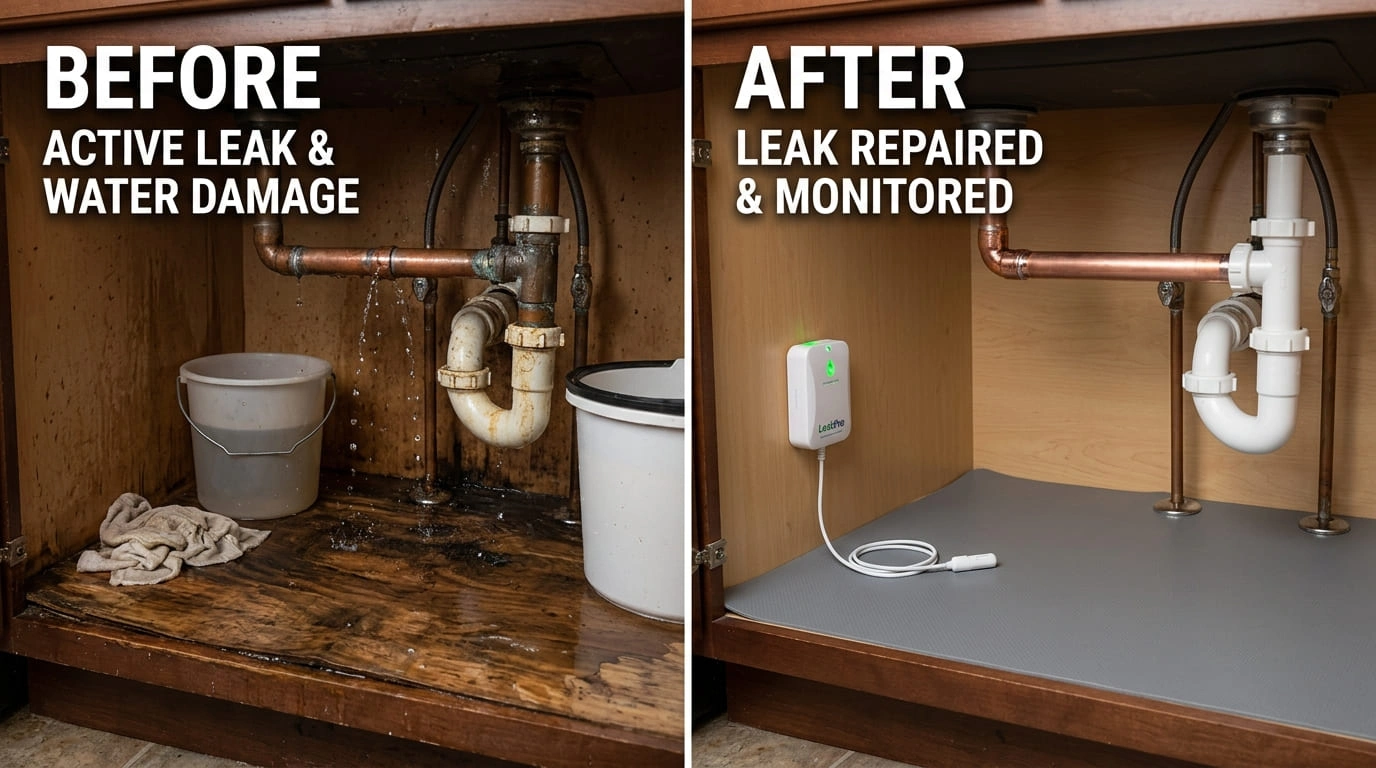
A successful investigation replaces assumptions with findings. The next step may be a simple fixture repair, targeted pipe access, further testing, or a review of non-plumbing moisture sources.
Typical changes in understanding include:
Detection does not itself dry materials, restore finishes, or guarantee that every contributing condition has been resolved. For water damage restoration, separate service may be required.
How Do Plumbers Find Hidden Water Leaks?
Match the Method to the Pipe, Property & Suspected Problem
Leak investigation can combine several methods. The appropriate choice depends on pipe access, operating conditions, materials, background noise, and the type of leak suspected.
- Meter and usage checks: Help establish whether water is being consumed when it should not be
- Controlled isolation: Helps distinguish building plumbing from separately valved systems
- Pressure-related testing: Can help evaluate the integrity of an isolated section
- Acoustic investigation: Uses sound associated with escaping pressurized water
- Thermal imaging: Identifies surface temperature patterns that may support further investigation
- Moisture measurements: Help assess affected materials and moisture distribution
Thermal imaging does not see directly through walls or concrete. Temperature contrast and site conditions affect its usefulness, while background noise and pipe conditions can limit acoustic methods. Findings should therefore be interpreted together rather than from one instrument alone.
Does a Hidden Leak Mean You Need New Pipes?
Compare Localized Repair, Rerouting & Broader Replacement
Finding one leak does not automatically establish that every pipe needs replacement. The decision depends on the affected section, access, pipe condition, failure history, and the cost of each realistic option.
| Situation | Localized Repair Considerations | Replacement Considerations |
|---|---|---|
| Accessible isolated defect | May allow a focused repair | Broader replacement may be unnecessary |
| Repeated failures | Another repair may address only one location | A wider solution may warrant discussion |
| Difficult under-slab access | Consider access and finish-restoration costs | Rerouting may be an alternative where feasible |
| Widespread deterioration | Repair may offer limited long-term value | Evaluate the affected system as a whole |
| Changed building requirements | Existing layout may limit options | A redesigned installation may be appropriate |
Replacement deserves consideration when supported by documented condition, recurring failures, or a clearly explained practical advantage—not simply because the leak is concealed.
How Much Does Water Leak Detection Cost in Jacksonville, FL?
Detection, Access, Repair & Restoration Are Different Costs
Pricing depends on how much investigation is required and how accessible the suspected plumbing is. A meaningful estimate should explain the work being priced rather than relying on a single figure without scope.
Main cost drivers include:
- Size and complexity of the property
- Suspected pipe route and depth
- Available shutoffs and access points
- Number of systems requiring isolation
- Diagnostic methods and investigation time
- Emergency scheduling and additional site requirements
| Service Type | How Pricing Is Determined |
|---|---|
| Initial leak investigation | Defined diagnostic scope and property conditions |
| Extended locating work | Additional time, access, or specialist methods |
| Localized repair | Labor, materials, and approved access work |
| Rerouting or replacement | Route, length, materials, and installation requirements |
| Restoration | Separate drying, flooring, wall, or finish work where needed |
An estimate for commercial leak detection should also address affected units, operating restrictions, and coordination requirements.
When Should You Schedule Hidden Leak Detection?
Persistent Evidence Matters More Than a Single Guess
You do not need a visible burst pipe to request help. Investigation is appropriate when an unexplained pattern persists or when moisture threatens occupied areas.
Consider scheduling when:
- JEA usage remains unusual after accounting for known water uses
- A running-water sound continues without an obvious fixture source
- Dampness repeatedly returns after drying
- A yard area stays wet without a clear explanation
- A toilet, appliance, or irrigation system may be using water unexpectedly
- Repairs have not resolved the original symptom
- A proposed major repair lacks a clear explanation of the leak location
A JEA alert can be an important prompt to investigate, but it does not identify the leaking pipe or establish the corrective work required.
Commercial Water Leak Detection in Jacksonville
Coordinate the Investigation Around Tenants, Staff & Daily Operations
Commercial plumbing problems can affect more than one room or occupant. Shared distribution, multiple water-using appliances, restricted areas, and tenant schedules can complicate the investigation.
Cummer Jack Plumbing supports owners and managers seeking a defined plan for commercial water loss.
| Commercial Service Need | Investigation Focus |
|---|---|
| Unexplained consumption | Review usage against operating patterns and equipment |
| Hidden supply leaks | Assess affected zones and available isolation |
| Multi-unit concerns | Coordinate access and identify shared versus unit-specific systems |
| Repair planning | Explain findings and separately proposed corrective work |
| Maintenance documentation | Record work performed and relevant observations |
Properties include:
- Shopping centers and offices
- Restaurants and hospitality venues
- Apartment and condominium communities
- Schools and community buildings
- Warehouses and industrial premises
Commercial owners need clear scheduling, manageable access requirements, and understandable documentation—not just a suspected location.
| Site Condition | Planning Consideration |
|---|---|
| Multiple occupied units | Access permissions and coordinated appointments |
| Large buildings | Investigation by zone or system |
| Restricted operating hours | Approved service windows |
| Industrial environments | Site-specific safety and equipment requirements |
Why Hire a Professional for a Concealed Plumbing Leak?
Reduce Guesswork Before Opening Walls, Floors, or Ground
Professional investigation helps connect the reported symptom with the system involved. That distinction matters when different causes could produce similar moisture or consumption patterns.
Benefits include:
- A structured assessment rather than random demolition
- Better separation of plumbing leaks from other moisture concerns
- Clearer choices about additional testing and access
- A practical basis for comparing repair options
- Records of the investigation and approved work
- Coordination for commercial and multi-unit properties
No diagnostic process can remove every uncertainty in advance. The objective is to explain what is known, what is likely, and what must happen next.
What Should You Do During an Active Water Leak?
Avoid Electrical Hazards, Unsafe Access & Uncontrolled Demolition
If water is actively spreading, prioritize safety over locating the exact pipe.
- Keep people away from wet electrical equipment and outlets
- Do not enter standing water where electrical hazards may exist
- Avoid rooms beneath visibly sagging or damaged ceilings
- Use only a familiar, safely accessible private shutoff; do not force valves
- Do not cut into walls or floors to follow a sound
- Do not operate utility-owned valves or excavate around unknown services
- Report suspected utility-main incidents to the utility
For an immediate threat to life or an electrical emergency, contact emergency services.
Water Leak Detection FAQs for Homes & Businesses
Clear Answers About JEA Alerts, Slab Leaks & Service Scope
Check accessible fixtures and known water uses, then arrange investigation if the pattern remains unexplained. An alert identifies unusual consumption—not the exact location.
First account for automatic water users such as irrigation, toilets, and appliances. EPA recommends comparing readings over a two-hour period with no water use; a change suggests a probable leak. Only observe a safely accessible meter without tampering.
Yes. Water may enter concealed materials or soil, and a running toilet can send water directly into the drain. No puddle does not rule out water loss.
It can be a reason to investigate, but warmth alone does not establish a leaking pipe. The pattern must be considered alongside other evidence. See our slab leak detection service for more details.
No. It detects temperature patterns, and its usefulness depends on the conditions. It is not a direct image of water inside a wall.
Not automatically. Detection, access, repair, and restoration should be identified separately in the agreed scope.
Contact JEA about billing, meter-account concerns, or suspected utility incidents. Contact a plumber about suspected private-property plumbing problems. The location of surface water alone does not establish responsibility.
JEA considers qualifying requests but does not guarantee approval. Requests must be submitted within 90 days of the billing period in question. Its published limits include two adjustments in 36 months per residence and no more than two consecutive billing periods per approved adjustment.
For qualifying water loss that did not enter the sewer system, JEA requires a plumber's statement or receipt establishing completed repair before considering a wastewater adjustment. A water-rate adjustment does not simply erase the gallons billed.
The findings should explain what was checked, what remains unresolved, and whether additional access, monitoring, or specialist investigation is recommended.
Cummer Jack Plumbing offers 24/7 availability. Call (904) 227-4220 with your location and symptoms to discuss urgency and scheduling.
Know the Findings, Scope & Next Step
Straightforward Communication From the First Call
You deserve an explanation of what the investigation is intended to establish and what additional work may be needed. Cummer Jack Plumbing focuses on clear communication rather than promising that every concealed leak can be located immediately or without access.
If symptoms continue after service, contact us to discuss the circumstances and the appropriate next step under your agreed service terms.
Cummer Jack Plumbing
735 Lane Ave N
Jacksonville, FL 32254, United States
Plumbing Qualifications for Leak Investigation & Repairs
Match the Professional Scope to the Actual Project
Leak investigation, pipe repair, underground work, and specialized commercial systems can involve different responsibilities. The relevant qualification is the one appropriate to the work being performed.
Credential categories associated with different plumbing scopes include:
- Florida Certified Plumbing Contractor (CFC)
- Registered Plumbing Contractor (RF)
- Journeyman plumbing qualifications
- Certified Underground Utility and Excavation Contractor (CUC)
- Medical Gas System Certification for applicable systems
A plumbing investigation should not be described as an official utility certification unless that specific service and authority apply. Your project scope should identify any separate installation, permitting, or specialist requirements.
Emergency Water Leak Detection in Jacksonville
Call When Active Water Loss Threatens Your Property
An actively leaking pipe, spreading water, or a plumbing failure affecting occupied areas requires a different response from a bill inquiry with no active damage.
When you call, explain:
- Whether water is currently spreading
- Whether the source can be safely isolated
- Which rooms, units, or business operations are affected
- Whether electrical equipment or damaged ceilings are involved
- Any access restrictions
Our emergency service conversation focuses on urgency, safe access, mitigation needs, and the appropriate investigation.
Emergency situations may include visible pipe damage, uncontrolled supply leaks, or rapidly worsening concealed leakage. A high-usage alert alone does not necessarily require emergency dispatch.
Leak Investigation Documentation for Insurance Discussions
Keep Findings, Repairs & Damage Records Distinct
Plumbing records can help you explain an incident to your insurer, but they do not determine coverage.
Depending on the work performed, useful records may include:
- Initial observations and accessible-condition photographs
- The reported symptoms and investigation scope
- Relevant test findings and limitations
- Repair descriptions and itemized invoices
- Follow-up observations after corrective work
A suspected cause should not be presented as a proven cause without supporting evidence. Drying, mold assessment, and building restoration may require separate professionals. For related needs, see our water damage restoration service.
Coverage depends on your policy and the insurer's assessment. Plumbing service does not guarantee reimbursement or claim approval.
Warranty Terms for Leak Repairs & Installed Components
Diagnostic Work and Repair Warranties Are Not the Same
A diagnostic visit assesses conditions within its agreed scope. A repair addresses an identified defect. New components may also have manufacturer terms.
| Coverage Area | What the Terms Should Explain |
|---|---|
| Diagnostic service | Scope, limitations, and any return-visit policy |
| Repair workmanship | Covered work, duration, exclusions, and reporting process |
| Installed parts | Applicable manufacturer conditions |
| Access and restoration | Whether these are included or separately contracted |
| Documentation | Records supplied for the completed work |
The applicable written terms should be explained with the estimate or service agreement. Do not assume that a repair warranty covers every unrelated pipe or future leak in the building.
Six Equipped Service Vans Supporting Jacksonville Plumbing Calls
People, Tools & Planning for the Property in Front of Us
Cummer Jack Plumbing's six-van fleet supports our 60-person team across residential and commercial service work.
The equipment and materials needed depend on the investigation. A straightforward fixture concern may require a different setup from an underground or under-slab locating assignment.
Service planning considers:
- The reported symptom and suspected plumbing system
- Diagnostic equipment appropriate to the assignment
- Access and isolation requirements
- Materials needed for separately approved repairs
- Any specialist support or return visit required
The goal is a properly planned visit—not an unsupported promise that every concealed problem can be resolved in one appointment.
Discuss Payment Arrangements for Major Plumbing Projects
Separate the Investigation Budget From the Repair Budget
A suspected leak does not tell you the eventual repair cost. Start by defining the diagnostic scope, then compare the corrective options supported by the findings.
For larger projects, discuss:
- The investigation charge
- The proposed repair or replacement scope
- Access and restoration costs
- Deposit and payment milestones
- Whether any financing or payment arrangement is available
Financing is subject to the options actually offered and any applicable approval terms. Do not assume a lending program or interest-free arrangement applies to your project.
Recognition Begins With a Well-Handled Plumbing Visit
Clear Answers Are More Useful Than an Unsupported Award Claim
When selecting a leak detection provider, focus on how the service is explained and delivered.
Our customer-focused priorities include:
- A clear understanding of the reported concern
- Respect for the property and occupied areas
- An explained diagnostic scope
- Practical findings and repair discussions
- Accessible communication after the visit
Industry recognition can provide context, but it does not replace the evidence behind a particular diagnosis. Your service decision should rest on relevant capabilities and clear terms.
Senior, Military & Plumbing Discount Inquiries
Understand Eligibility Before Authorizing Work
Senior customers, military households, and veterans are welcome to ask which current offers may apply to their plumbing visit.
When discussing a discount, ask about:
- Eligible services and minimum charges
- Whether diagnostic work qualifies
- Required eligibility information
- Emergency-service exclusions
- Whether offers can be combined
A general plumbing promotion may not apply to specialist locating, excavation, or separately contracted restoration. Any applicable savings should be shown in the agreed price rather than assumed afterward.
Water Leak Detection Scheduling & Emergency Plumbing Hours
Call Any Day to Discuss Your Property's Needs
Cummer Jack Plumbing offers 24/7 availability for service inquiries and urgent plumbing concerns. Appointment timing depends on the location, urgency, access, and work required.
| Day | Availability |
|---|---|
| Monday | 24 hours |
| Tuesday | 24 hours |
| Wednesday | 24 hours |
| Thursday | 24 hours |
| Friday | 24 hours |
| Saturday | 24 hours |
| Sunday | 24 hours |
Phone: +1 (904) 227-4220
Email: cummerjacksonplumbing@gmail.com
Website: emergencyplumberjacksonvillefl.com
For commercial properties, tell us about preferred service windows and site-access requirements when booking.
What Should You Compare Before Hiring a Leak Detection Provider?
Ask the Same Questions of Every Plumbing Company
A lower advertised charge may cover a different service. Compare the proposed investigation, reporting, exclusions, and next steps before choosing a provider.
| Feature | Cummer Jack Plumbing Service Discussion | What to Ask Any Provider |
|---|---|---|
| Local operations | Jacksonville-based plumbing service | Where is the team based, and is my address covered? |
| Team and fleet | 60 professionals and six service vans | Who will attend, and what support is available? |
| Investigation scope | Discussed around the reported symptoms | What exactly is included? |
| Repair planning | Separate from the diagnostic decision | Does the estimate include repairs? |
| Availability | 24/7 service contact | What scheduling or emergency charges apply? |
| Documentation | Defined according to the work performed | What findings and records will I receive? |
| Further investigation | Explained when additional work is needed | What happens if the source remains uncertain? |
Choose an understandable scope and a realistic explanation—not a guarantee that ignores site conditions.
Contact Cummer Jack Plumbing for Water Leak Detection in Jacksonville
Tell Us What Changed—and We'll Discuss the Next Step
You do not need to know which pipe is leaking before you call. Tell us about the high water bill, JEA alert, recurring dampness, running-water sound, or commercial plumbing disruption.
Have your property address, relevant usage information, and access details ready. We will discuss the concern, urgency, and appropriate service scope so you can make an informed decision.
Contact Cummer Jack Plumbing
(904) 227-4220
cummerjacksonplumbing@gmail.com
Water Leak Detection
735 Lane Ave N
Jacksonville, FL 32254
24/7 Emergency Service
Current Special Offers
- $29 Water Heater Flush & Maintenance
- $50 Off Any Plumbing Repair
- $99 Drain Clearing Special
- Free In-Home Water Quality Test
- Up to $500 Off Water Heater Replacement
Get a clearer understanding of the problem and your next steps with water leak detection in Jacksonville, FL from Cummer Jack Plumbing.
Water Leak Detection Across Greater Jacksonville FL
Our team of 60 professionals responds across Northeast Florida with 6 fully equipped service vans. From Orange Park to St. Augustine, Fernandina Beach to Middleburg—we cover Duval County and beyond.