Septic Tank Pumping and Cleaning in Jacksonville, FL
Northeast Florida Septic Services for Homes, Businesses & Managed Properties
When you need septic tank cleaning and pumping in Jacksonville, FL, you want more than an emptied tank. You want to understand what is happening, what the service includes, and whether pumping is the right solution.
Cummer Jack Plumbing helps residential and commercial customers take the next step with routine maintenance, drainage concerns, sewage backups, and recurring wastewater problems. Established in 2010, our Jacksonville plumbing business brings together a 60-person team and six equipped service vans to support local property owners.
Whether you are scheduling maintenance or calling because the toilets are backing up, start with a conversation about your symptoms, service history, and property conditions.
Call Now for Septic Service: (904) 227-4220Call for scheduling, an explanation of the service scope, and help identifying the appropriate next step. Around-the-clock emergency plumbing assistance is available; pumping schedules depend on equipment availability, access, and safe ground conditions.
- Residential septic maintenance and commercial wastewater-service inquiries.
- Help distinguishing tank problems from blocked plumbing.
- Clear discussion of access, inspection, and additional-work requirements.
- Emergency plumbing support throughout Jacksonville and surrounding service areas.
Request Septic Service
Fill out the form and we'll contact you immediately!
Local Plumbing Experience With a Practical Approach to Septic Problems
Understand the Recommendation Before You Authorize the Work
Clarity matters when wastewater problems interrupt your home or business. A routine pump-out, a clogged building drain, and a failing drainfield are different problems—and they should not receive the same automatic recommendation.
Our approach starts with the information that matters: what is backing up, when it happens, when the system was last serviced, and whether rain or changes in occupancy could be involved. We explain the proposed work so you can make an informed decision instead of approving an unfamiliar repair under pressure.
- Jacksonville-based business established in 2010.
- Residential, commercial, and industrial plumbing experience.
- A 60-person team supported by six equipped service vans.
- Emergency plumbing assistance available seven days a week.
- Service discussions focused on scope, access, findings, and next steps.
Local Service Across Jacksonville & Surrounding Communities
Septic Service Near Jacksonville Neighborhoods, Homes & Business Corridors
Property-Specific Help From the Westside to Mandarin and Oceanway
A Jacksonville address does not automatically mean a property uses city sewer—or septic. Before scheduling work, identify the wastewater system serving your building and share any available plans, pumping records, or utility information.
From our Lane Avenue North location, Cummer Jack Plumbing serves customers throughout Jacksonville. Whether your property is near Murray Hill, the Jacksonville-Baldwin Rail Trail, the Mandarin area, or Northside business corridors, useful service planning begins with the actual address, tank access, and site conditions.
- Jacksonville service inquiries: Oceanway, Jacksonville Heights, Mandarin, Del Rio, Greenland, Highlands, Arlington Hills, and surrounding communities.
- Nearby service-area inquiries: Baldwin, Callahan, Yulee, Orange Park, Middleburg, Fruit Cove, and other listed service locations.
- Access details to share: gated entrances, narrow drives, landscaping, buried lids, parking restrictions, and known underground components.
Some Jacksonville neighborhoods have undergone sewer conversion through JEA's septic phase-out program. Neighborhood history alone does not establish a property's current connection status.
Septic Work Requires the Right Skills & Equipment
Specialized Septic Service Starts With the Right Assessment
Tank Pumping, Plumbing Diagnostics & System Repairs Have Different Requirements
Septic maintenance involves more than opening a lid and removing liquid. The work must account for tank access, accumulated solids, component condition, safe handling, and lawful disposal.
Florida DEP explains that registered septic contractors and state-licensed plumbers may pump septic tanks with the appropriate active service permit. Plumbing qualifications do not remove other applicable septic-service requirements.
When discussing service with Cummer Jack Plumbing, tell us whether you need a routine pump-out, troubleshooting, an inspection, or help understanding a replacement recommendation. Those requests can involve different equipment and scopes.
- Identify the requested service before scheduling.
- Discuss the equipment and access needed for the property.
- Separate routine observations from a comprehensive system inspection.
- Explain when additional assessment, permitting, or specialist involvement is necessary.
Is Your Septic Tank Full, or Is Something Else Causing the Backup?
Similar Symptoms Can Point to Different Wastewater Problems
Slow toilets, gurgling drains, sewage odors, and wet ground can indicate a septic-system problem. However, the same complaint may involve a blocked building drain, a filter, damaged piping, or poor drainfield performance.
EPA identifies slow drainage, plumbing backups, sewage odors, and damp or standing water around the system as warning signs requiring attention. These symptoms do not establish the cause on their own.
Call when you notice:
A useful assessment asks why the problem is occurring—not simply whether another pump-out can be scheduled. If your concern involves blocked building drains, our drain cleaning and hydro jetting services may also be relevant.
How Often Should You Schedule Septic Maintenance and Pumping?
Plan Service Around Your System, Household & Actual Conditions
An annual maintenance review can help you track system condition, but an annual review is not the same as an annual pumping requirement.
EPA generally recommends inspection every one to three years and pumping every three to five years. Tank size, occupancy, water use, and accumulated solids affect the interval; more complex systems may require additional maintenance.
| Maintenance Task | Description | Typical Timing | Why It Matters |
|---|---|---|---|
| Record review | Review previous pumping, repairs, and changes in occupancy | During maintenance planning | Establishes the system's service history |
| System inspection | Assess accessible components and operating conditions | Generally every one to three years; system-specific needs vary | Helps identify problems and maintenance needs |
| Tank pumping | Remove accumulated tank contents using appropriate equipment | Generally every three to five years, or as conditions require | Limits excessive solids accumulation |
| Filter maintenance | Inspect and service an installed effluent filter | According to system needs and manufacturer guidance | Helps maintain flow |
| Service documentation | Record completed work, observations, and recommendations | Each visit | Supports future maintenance decisions |
| Repair planning | Investigate damaged components or persistent symptoms | When indicated | Addresses problems pumping cannot resolve |
Maintenance planning tips:
- Arrange routine service before a known increase in occupancy.
- Share any history of rain-related backups before the visit.
- Review maintenance after adding living space or changing property use.
- Keep records together with available permits and system drawings.
- Maintain professional access without driving over the drainfield.
Pricing depends on the tank, access, included work, and any separately authorized services. Do not wait for a scheduled interval if sewage is backing up.
Who Needs Septic Tank Cleaning & Pumping in Jacksonville?
Support for Homeowners, Landlords & Commercial Property Managers
Septic service is relevant to properties that actually use an onsite wastewater system. A building's size or business category alone does not establish its pumping needs.
Cummer Jack Plumbing welcomes inquiries from:
- Homeowners planning routine maintenance.
- Landlords addressing tenant reports of drainage problems.
- Buyers and sellers arranging appropriate assessments.
- Property managers organizing service records and access.
- Businesses operating from septic-served properties.
- Community and institutional properties with onsite systems.
For commercial plumbing service, describe the building's use, operating hours, wastewater demands, and any known permit conditions. Commercial septic maintenance should be planned around the actual system rather than a residential schedule applied by default.
Why Does Your Septic System Back Up After Heavy Rain?
Saturated Ground Can Prevent a Drainfield From Accepting Wastewater
A rain-related backup does not automatically mean the tank needs pumping. When the surrounding ground is saturated, the drainfield may not accept wastewater normally.
Duval County advises conserving water during flood-related sluggish drainage and warns against pumping a tank dry when exceptionally high groundwater is the underlying problem. Pumping does not correct high groundwater and can create tank-damage risks.
Keep these conditions in mind:
During flooding, reduce avoidable water use and seek professional guidance. Duval County also advises delaying tank and drainfield repairs until the ground has dried; some systems resume functioning when unsaturated conditions return.
Septic Tanks, Filters, Drainfields & Pumped Systems
The Tank Is Only One Part of the Wastewater System
Pumping addresses material inside the tank. It does not, by itself, establish the condition of every pipe, control, pump, or drainfield component.
EPA describes both conventional gravity systems and alternatives that may use additional treatment or distribution equipment. The property's design determines the appropriate maintenance approach.
| System or Component | Main Function | Service Consideration | Important Distinction |
|---|---|---|---|
| Septic tank | Separates and holds wastewater solids | Access, condition, and accumulated material | Pumping does not repair structural damage |
| Effluent filter | Helps retain material before discharge | Cleaning and inspection where installed | Filter maintenance may be a separate task |
| Drainfield | Disperses and treats wastewater through suitable ground | Saturation, surfacing, and operating condition | A failed drainfield is not repaired by emptying the tank |
| Pump chamber and controls | Moves wastewater where the design requires pumping | Pump, alarm, and control assessment | Electrical or mechanical work may be needed |
| Advanced treatment equipment | Provides additional treatment | Manufacturer and system-specific maintenance | Standard pumping is not complete equipment servicing |
Share the system type when known. If it is unknown, provide available records rather than guessing. For pipe-related concerns, our pipe repiping and sewer line repair services may apply.
Our 6-Step Septic Service Process
What to Expect When You Contact Cummer Jack Plumbing
Initial Call & Property Assessment
Tell us about the symptoms, last pump-out, property use, tank location, and recent rainfall.
Scope, Pricing & Access Discussion
Review the requested service, equipment access, likely exclusions, and any inspection needs.
Onsite Assessment & Safe Setup
The service plan accounts for the tank location, access openings, site conditions, and safety limitations.
Agreed Pumping or Diagnostic Work
Complete the authorized work. Routine pumping and comprehensive system inspection remain distinct services.
Findings & Additional Recommendations
Discuss observed concerns, unresolved symptoms, and whether another assessment or repair is appropriate.
Records & Future Planning
Request documentation of completed work and use it to plan the next maintenance decision.
Additional work should be discussed before it changes the agreed scope or price.
What Is Included in a Septic Tank Pump-Out?
Discuss Pumping, Access, Inspection & Cleanup Separately
"Septic cleaning" can describe different service packages. A useful quote explains exactly what will be done instead of relying on a broad label.
Ask for a scope covering:
- The tank or tanks included.
- Locating and access arrangements.
- Pumping and removal of accumulated contents.
- Accessible observations included with the visit.
- Whether filter cleaning is included.
- How access openings will be secured afterward.
- Service records and recommendations.
- Any additional charges requiring approval.
| Scope Category | Examples to Discuss |
|---|---|
| Core pumping work | Specified tank, access opening, removal, and waste handling |
| Potential additional work | Locating, excavation, filter servicing, or separate diagnostics |
| Separate inspection | Defined assessment of the wider system |
| Repairs or replacement | Work requiring a separate recommendation and authorization |
| Restoration | Landscaping, hardscape, or other site repairs outside basic access work |
A pump-out is not a complete condition report for an entire property's wastewater system.
A More Informed Approach to Septic Service
Clear Scope, Useful Explanations & Better Maintenance Decisions
The best service experience leaves you understanding what happened and what remains to be addressed.
When arranging work with Cummer Jack Plumbing, discuss:
- Whether the symptoms suggest pumping, plumbing diagnostics, or both.
- The difference between included observations and a formal inspection.
- Access requirements before equipment arrives.
- Approval of additional work.
- Documentation for future maintenance.
- Follow-up options if symptoms continue.
For commercial customers, include operating restrictions and the right person to authorize work. Good coordination helps prevent a service visit from becoming an avoidable interruption.
What Should Improve After Septic Service?
Measure the Outcome Against the Problem You Called About
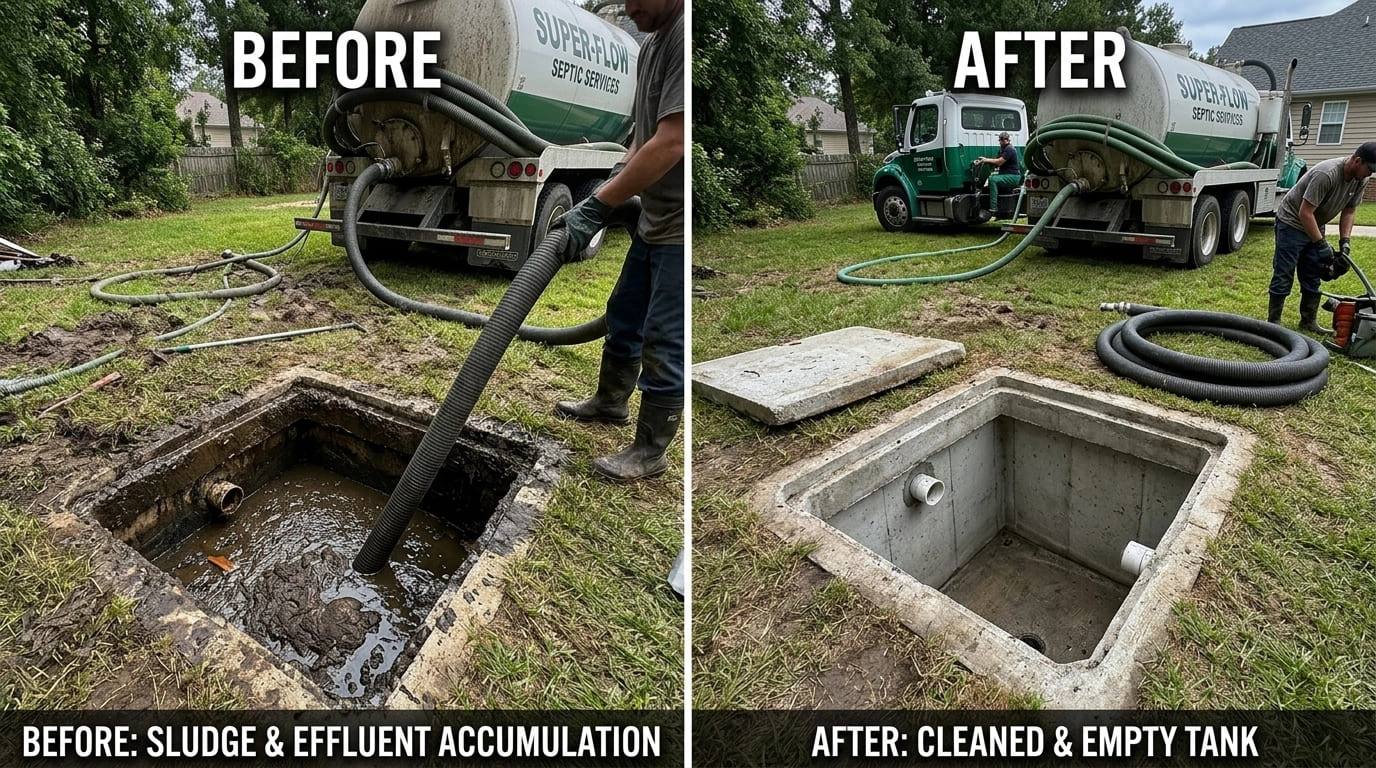
A successful service visit should have a defined purpose. If the purpose is scheduled solids removal, document that work. If the purpose is investigating a backup, determine whether the symptoms remain and what further assessment is needed.
No clear pumping history.
A documented service event and maintenance guidance.
Uncertainty about what the quote covers.
An agreed scope and explanation of additional work.
An assumption that every problem requires replacement.
A recommendation tied to the observed condition.
Recurring symptoms without a clear plan.
Identified next steps rather than another unexplained pump-out.
An emptied tank is evidence of pumping—not proof that a damaged drainfield or blocked pipe has been repaired.
How Professional Septic Pumping and Cleaning Works
Safe Access, Controlled Removal & Responsible Waste Handling
Professional service uses appropriate pumping equipment and access arrangements to remove accumulated material while respecting the property and system design.
The service discussion should cover:
- Suitable equipment and hose access.
- The correct tank openings.
- Removal of tank contents within the agreed scope.
- Inspection or servicing of accessible components where included.
- Securing access covers.
- Transport and disposal requirements.
- Any separate repair or installation needs.
Florida's requirements for septic pumping and maintenance continue to apply even when the work is performed by a state-licensed plumber.
For pipe-related concerns, ask about drain cleaning or an appropriately scoped sewer camera inspection. Those services should be recommended for a defined reason, not automatically added to every pump-out.
Do You Need Septic Pumping, a Repair, or Full Replacement?
An Expensive Recommendation Deserves a Clear Explanation
Pumping removes accumulated contents. Repairs address specific defects. Replacement becomes a separate decision when the condition, capacity, or permitted use calls for it.
| Situation | Role of Pumping | Further Assessment or Work |
|---|---|---|
| Accumulated solids | May be the appropriate maintenance service | Review future interval |
| Blocked building drain | Does not clear the pipe by itself | Plumbing diagnosis and suitable clearing |
| Clogged filter | Pumping alone may not address it | Filter assessment and servicing |
| Structural tank damage | Does not repair the structure | Repair or replacement evaluation |
| Drainfield problems | May provide limited temporary storage relief in suitable conditions | Determine the underlying cause and permitted remedy |
| Saturated ground | Does not solve high groundwater | Follow flood precautions and reassess conditions |
| Increased occupancy or changed use | Does not increase system design capacity | Review design and applicable requirements |
Seek a detailed explanation before major replacement, particularly when the original complaint or inspection findings remain unclear.
Repeated backups after pumping deserve investigation rather than an assumption that the tank simply needs emptying again. A sewer camera inspection may help identify the underlying cause.
How Much Does Septic Tank Pumping Cost in Jacksonville, FL?
Tank Size, Access & Service Scope Drive the Price
A reliable quote starts with the property—not an unexplained citywide average. Tell Cummer Jack Plumbing what you know about tank size, location, last service, symptoms, and access.
The main cost considerations include:
- Number and capacity of tanks.
- Locating and uncovering requirements.
- Equipment access and working distance.
- Included filter work or inspection.
- Additional diagnostics or repairs.
- Scheduling and emergency-service conditions.
| Service Request | How the Estimate Is Determined |
|---|---|
| Routine pump-out | Tank details, access, and agreed service scope |
| Pumping with filter maintenance | Installed components and included work |
| Locating or uncovering | Available records, depth, and site conditions |
| Diagnostic assessment | Symptoms and required investigation |
| Commercial septic service | System capacity, operating needs, and site requirements |
| Repair or replacement | Findings, design, access, and applicable approvals |
Before approving work, ask whether the price includes locating, excavation, inspection, and restoration. Request an explanation of charges that may change after arrival.
Does Your Property Need Pumping Now?
Maintenance History and Symptoms Matter More Than Guesswork
Schedule a service discussion when the pumping history is unknown, maintenance is due, or the system has developed warning signs.
Relevant situations include:
Not every symptom establishes a pumping need. EPA recommends assessing the system, including accumulated solids and component condition, rather than relying only on elapsed time.
If the property is on public sewer, a septic pump-out is not the appropriate service for its sewer-line problem.
Commercial Septic Tank Pumping for Jacksonville Properties
Plan Wastewater Service Around Your Building's Operations
A septic problem can affect restrooms, tenants, customers, and daily operations. Commercial properties need a service plan that considers system capacity, site access, business hours, and authorization procedures.
Cummer Jack Plumbing provides a point of contact for commercial plumbing in Jacksonville and for discussing septic-related needs at properties with onsite systems.
| Commercial Service Need | Planning Focus |
|---|---|
| Scheduled maintenance | System records, capacity, and service history |
| Drainage troubleshooting | Determine whether the concern is in the building plumbing or onsite system |
| Repair planning | Scope, access, approvals, and operational impacts |
| Multi-property coordination | Address-specific records and scheduling |
| Maintenance review | Changes in occupancy, activity, or wastewater demand |
Relevant properties may include:
- Offices and retail buildings.
- Rental and managed properties.
- Hospitality and community facilities.
- Warehouses and commercial sites with onsite wastewater systems.
Why coordination matters:
- Establish one authorized contact.
- Communicate restroom or tenant impacts.
- Plan access around deliveries and parking.
- Keep service records organized.
| Property Consideration | Information to Share |
|---|---|
| Multiple tanks | Locations, capacities, and records |
| Restricted hours | Operating schedule and access windows |
| Gated or secured site | Entry instructions and escort requirements |
| Industrial activity | Wastewater characteristics and applicable restrictions |
Grease interceptors, process wastewater, and domestic septic systems are not interchangeable service categories.
Why Professional Septic Service Matters
Protect System Function and Make Better Repair Decisions
Regular septic maintenance helps manage accumulated solids and creates opportunities to identify concerns before they become more disruptive. EPA identifies inspection, pumping, responsible water use, and appropriate flushing habits as important maintenance practices.
Professional service can help you:
- Understand what maintenance was completed.
- Recognize problems that need separate assessment.
- Establish a usable service history.
- Plan future maintenance around actual conditions.
- Avoid treating additives as a substitute for pumping.
- Make informed decisions about repair recommendations.
The goal is not a promise that the system will never fail. It is a better-maintained system and a clearer understanding of its condition.
Why DIY Septic Pumping and Tank Entry Are Dangerous
Keep Away From Open Tanks, Sewage & Unstable Ground
Septic systems should not be treated as homeowner-accessible work spaces. Do not enter a tank or attempt to retrieve objects from it. Keep children and pets away from exposed access points and suspected sewage.
Untreated wastewater can contain pathogens, and surfacing sewage is a public-health hazard. EPA advises contacting a health professional after exposure concerns.
Duval County specifically warns against pumping a tank dry under exceptionally high-groundwater conditions.
Jacksonville Septic Tank Cleaning & Pumping FAQs
Understand the Service Before You Book
EPA generally recommends pumping every three to five years, with inspection every one to three years. Your tank, occupancy, water use, and solids accumulation affect the appropriate interval. Call (904) 227-4220 to discuss your specific situation.
Both terms may be used for tank-content removal, but service packages vary. Ask whether the quote includes accumulated solids, filter work, access, and inspection.
Not necessarily. A routine pump-out and a broader system inspection have different scopes. Agree on the inspection deliverables before scheduling. Our sewer camera inspection service is available as a separate diagnostic tool.
Normal wastewater use refills a tank with liquid. Liquid in the tank is not, by itself, proof that another pump-out is due. Persistent backups, abnormal levels, or frequent service needs require assessment.
No. Removing tank contents does not restore a failed drainfield. The cause of poor performance must be investigated.
A filter is one component to assess where installed. Similar symptoms can also involve plumbing or downstream system conditions. Consider scheduling a drain cleaning assessment if the issue persists.
Do not assume pumping is safe or useful. Duval County warns against pumping when exceptionally high groundwater is the underlying problem. Reduce water use and call (904) 227-4220 for guidance.
No. EPA does not recommend septic additives for domestic wastewater treatment; they do not replace appropriate maintenance.
Arrange a clearly defined septic assessment rather than assuming a general home inspection or pump-out establishes the condition of the whole system. Contact us to discuss assessment options.
Yes. JEA encourages owners with current problems to make necessary repairs because project planning and physical connection can take time. Address-specific program information matters.
No. Abandonment involves permanently taking a system out of use under applicable requirements. Pumping may be one part of that work.
Call with your address and symptoms. Scheduling depends on the requested work, equipment, access, demand, and safe site conditions. Call (904) 227-4220 to check availability.
Know What You Are Authorizing From the Start
Scope, Communication & Follow-Up Matter
Cummer Jack Plumbing's service conversation should leave you understanding the requested work and the next step. If a recommendation is unclear, ask what finding supports it and what alternatives are available.
Before proceeding, request:
- A defined scope.
- An explanation of included and additional charges.
- Written terms for any applicable warranty.
- Information about follow-up if the original symptoms continue.
If a problem returns after service, describe what changed and when. A renewed assessment may be needed; a recurring backup does not automatically establish that pumping was incomplete or that a new tank is necessary.
Cummer Jack Plumbing
735 Lane Ave N
Jacksonville, FL 32254, USA
What Credentials Matter for Septic Service in Florida?
The Right Authorization Depends on the Service Being Performed
Septic pumping, plumbing repair, system modification, and replacement can carry different requirements. Relevant credentials should relate to the work—not simply add more titles to a page.
Florida DEP states that registered septic contractors and state-licensed plumbers may pump tanks with an appropriate active service permit. State-licensed plumbers remain subject to other applicable septic requirements.
Credential considerations include:
- State plumbing licensure where relevant.
- Septic contractor registration where applicable.
- Appropriate pumping-service authorization.
- Qualifications for specialist equipment or system maintenance.
- Required permits and inspections for the proposed repair.
Discuss the service-specific qualifications and scope when arranging work with Cummer Jack Plumbing.
Emergency Septic and Sewage-Backup Help in Jacksonville
Call When Wastewater Problems Interrupt Your Property
If sewage is entering the building or multiple fixtures suddenly stop draining, call Cummer Jack Plumbing at (904) 227-4220. Explain whether wastewater is inside, whether the yard is flooded, and whether the property uses septic or public sewer.
Emergency coordination starts with:
- A telephone discussion of symptoms and immediate concerns.
- Identification of the likely service category.
- Review of access and site conditions.
- Scheduling appropriate plumbing assessment or pumping.
- Discussion of additional work after findings are available.
Call about:
Emergency plumbing availability does not mean pumping is appropriate under every condition. High-groundwater precautions still apply. For sewage-related property damage, our water damage restoration service may also be relevant.
Documentation for Septic-Related Insurance Questions
Service Records Help Explain What Happened
If wastewater damages your property, your insurer may request information about the incident and completed work. Ask about available documentation when arranging service.
Useful records can include:
- Photos of accessible conditions.
- The reported symptoms and service request.
- Observations within the assessment scope.
- Itemized work descriptions and invoices.
- Separate repair recommendations.
Coverage depends on your policy and the insurer's assessment. Plumbing service does not establish coverage, guarantee reimbursement, or replace advice from your insurance representative.
Keep your own timeline, including when you first noticed the problem and any recent pumping or repairs.
Septic Service, Repair & Replacement Warranty Questions
Different Types of Work Need Different Terms
A pump-out, a component repair, and a new installation should not be presented as carrying the same protection.
| Coverage Category | What to Ask |
|---|---|
| Service concern | How to report a concern about the completed work |
| Repair workmanship | Which labor is covered and for how long |
| Replacement components | Applicable manufacturer terms |
| Exclusions | Existing defects, unrelated failures, misuse, or site conditions |
| Documentation | Which invoices and records should be retained |
Request written terms before authorizing work with an associated warranty.
Pumping alone should not be interpreted as a warranty against drainfield problems, groundwater effects, or future blockages.
Six Equipped Service Vans Supporting Jacksonville Plumbing Calls
Pumping Equipment and Plumbing Vehicles Serve Different Roles
Cummer Jack Plumbing's six service vans support plumbing operations across the service area. Septic tank pumping requires suitable pumping equipment and waste-handling arrangements; a plumbing van is not a substitute for a pump truck.
When arranging a visit, discuss:
- The equipment needed for the requested service.
- Vehicle and hose access.
- Driveway width and surface conditions.
- Gate restrictions and parking.
- Known tank and drainfield locations.
- Whether diagnostics and pumping require separate scheduling.
The right equipment plan begins before arrival, especially at commercial sites or properties with limited access.
Payment Planning for Septic Repairs and System Upgrades
Separate Immediate Needs From Long-Term Investment
If assessment points to major work, request a written scope before deciding how to pay for it. Distinguish necessary repairs from optional upgrades and ask about the payment methods available for your project.
Consider:
- A separate estimate for each proposed work category.
- Applicable payment timing.
- Whether phased work is technically appropriate.
- Any financing terms offered for the specific project.
JEA also identifies assistance resources, including a commercial septic grant program for qualifying properties and the City's Utility Tap-In Program. Eligibility and available assistance are program-specific; neither should be assumed from a Jacksonville address alone.
Look Beyond Award Labels When Choosing a Septic Provider
Relevant Capabilities Matter More Than Promotional Language
Recognition can help introduce a business, but your service decision should rest on the work being offered, the qualifications involved, and the clarity of the proposal.
When comparing providers, prioritize:
- Experience relevant to your problem.
- Appropriate service authorization.
- Equipment suited to the property.
- A defined pumping or inspection scope.
- Transparent additional-work procedures.
- Useful records and follow-up information.
Ask Cummer Jack Plumbing practical questions about your property and requested service. The answers should help you evaluate the proposal on its merits.
Senior, Military & Other Septic Service Discount Inquiries
Discuss Eligibility Before Scheduling
If you are a senior, active-duty service member, veteran, or family member arranging work for someone else, ask about any applicable offer when you call.
Promotional plumbing offers do not automatically apply to septic pumping or specialist services.
Before relying on a discount, establish:
- Eligible services.
- Any minimum charge.
- Exclusions for emergency or specialist work.
- Whether offers can be combined.
- The final scope and price.
Share any advertised promotion during the initial discussion so it can be addressed before work is authorized.
Cummer Jack Plumbing Service Hours in Jacksonville
Emergency Plumbing Assistance Seven Days a Week
Cummer Jack Plumbing offers around-the-clock emergency plumbing assistance. Routine septic work and pumping appointments are scheduled according to service needs, equipment, access, and safe conditions.
| Day | Emergency Plumbing Availability |
|---|---|
| Monday | 24 hours |
| Tuesday | 24 hours |
| Wednesday | 24 hours |
| Thursday | 24 hours |
| Friday | 24 hours |
| Saturday | 24 hours |
| Sunday | 24 hours |
Phone: (904) 227-4220
Email: cummerjacksonplumbing@gmail.com
Website: emergencyplumberjacksonvillefl.com
How Should You Compare Jacksonville Septic Service Providers?
Look for Clear Answers, Not Assumptions About Competitors
The lowest quote and the longest list of promises do not necessarily describe the same service. Compare what each proposal includes and how additional work will be handled.
| Feature | Ask Cummer Jack Plumbing | Ask Any Other Provider |
|---|---|---|
| Requested service | Is this pumping, inspection, diagnostics, or a combination? | Is the scope equivalent? |
| Equipment | What equipment is needed for this property? | Is access suitable? |
| Qualifications | What authorization applies to the work? | Can the relevant details be provided? |
| Access work | Is locating or uncovering included? | Are additional charges explained? |
| Inspection | What is assessed, and what is excluded? | Is it a full inspection or limited observation? |
| Additional work | How will recommendations be approved? | Will authorization be requested? |
| Documentation | What records will I receive? | Are findings and completed work recorded? |
| Follow-up | What happens if symptoms continue? | What terms apply? |
A useful comparison makes differences visible without assuming that competing companies lack experience or capability.
Contact Cummer Jack Plumbing for Septic Service in Jacksonville, FL
Tell Us What Is Happening at Your Property
Start With the Facts You Already Know
Whether you are planning maintenance, dealing with a backup, buying a septic-served home, or comparing repair recommendations, start with the facts you already know.
When you call, share:
- The property address.
- The symptoms and when they started.
- The last pumping date, if known.
- Tank location or available records.
- Recent rain or flooding.
- Access concerns.
- Residential or commercial use.
If JEA sewer conversion may affect your plans, identify the property's actual program status before assuming maintenance can wait. JEA encourages necessary repairs while connections remain pending.
(904) 227-4220
Septic Tank Cleaning & Pumping
735 Lane Ave N
Jacksonville, FL 32254, USA
Current Special Offers
- $29 Water Heater Flush & Maintenance
- $50 Off Any Plumbing Repair
- $99 Drain Clearing Special
- Free In-Home Water Quality Test
- Up to $500 Off Water Heater Replacement
Make an informed maintenance decision with septic tank cleaning and pumping in Jacksonville, FL, from Cummer Jack Plumbing.