Walk-in Bathtub Repair and Replacement in Jacksonville, FL
Northeast Florida Walk-in Tub Services for Leaks, Slow Drains, and Replacement Planning
A leaking door should not automatically mean buying a new bathtub. Cummer Jack Plumbing provides walk-in tub repair and replacement in Jacksonville, FL, helping homeowners, caregivers, and property managers understand what has failed and what makes sense next.
Whether water escapes around the door, the drain takes longer than usual, or the jets have stopped working, start with diagnosis rather than guesswork. Our Jacksonville plumbing business brings 16 years of service experience, 60 skilled professionals, and six equipped service vans to residential and commercial plumbing needs.
We assess the existing installation, explain repair options, and help plan replacement when the condition, available parts, or your bathing needs make an upgrade more practical. Specialized components are assessed by model, with manufacturer or electrical-service coordination where necessary.
- Door-leak diagnosis and model-compatible seal replacement
- Drain, supply-line, faucet, and accessible connection repairs
- Repair-versus-replacement guidance without assuming a new tub is necessary
- Residential service and commercial plumbing coordination
- 24/7 availability for urgent plumbing concerns
Call anytime for urgent plumbing assistance or to arrange an assessment. Appointment timing and repair completion depend on access, the problem, and parts availability.
Request Walk-in Tub Service
Fill out the form and we'll contact you immediately!
Walk-in Tub Plumbing Repair Backed by 16 Years of Local Service
Practical Answers Before You Commit to a Major Bathroom Project
You need more than someone who sells new tubs. You need a plumbing team that will listen to the symptoms, inspect the existing installation, and explain the difference between a repairable connection, an unavailable component, and a replacement project.
Cummer Jack Plumbing serves Jacksonville and surrounding communities with residential repair, commercial plumbing, water-line work, drain services, and bathroom improvement support. That broader plumbing perspective matters when the apparent tub problem actually involves the bathroom drain, incoming water supply, or another connected fixture.
- Established in 2010.
- A team of 60 skilled professionals.
- Six equipped service vans.
- Jacksonville-based service from 735 Lane Ave N.
- Around-the-clock availability for urgent plumbing needs.
- Clear separation between diagnostic findings, recommended work, and optional improvements.
Walk-in Tub Repair in Mandarin, Arlington, Riverside, and Beyond
Convenient Service Planning Throughout Jacksonville and the First Coast
From homes near the Cummer Museum of Art & Gardens to properties around the St. Johns Town Center area, a dependable bathing fixture is part of everyday comfort. We help customers explain the problem, arrange access, and plan repairs around household or property-management needs.
Our service-area planning covers Jacksonville neighborhoods and surrounding communities. For appointments outside the city, tell us the property address so we can discuss scheduling and the appropriate project scope.
- Jacksonville communities: Mandarin, Arlington Hills, Baymeadows, Murray Hill, Riverside, Cedar Hills, Oceanway, Sandalwood, and Jacksonville Heights.
- Additional neighborhood coverage: Beach Haven, Greenland, Del Rio, Windy Hill, East Arlington, and Chimney Lakes.
- Nearby service areas: Orange Park, Atlantic Beach, Neptune Beach, Jacksonville Beach, Fruit Cove, Ponte Vedra Beach, and Yulee.
- Familiar local reference points: the Cummer Museum, Florida Theatre, St. Johns Town Center, and Jacksonville's Riverwalk areas.
For broader property needs, explore our Jacksonville service areas.
Targeted Walk-in Tub Leak, Drain, and Component Diagnosis
Identify the Failed Component Before Replacing the Entire Fixture
A door leak, a loose plumbing connection, and a failed air blower are different problems. The correct repair depends on the tub's construction, installation, component layout, and available replacement parts.
Manufacturer documentation distinguishes water pumps, air blowers, heaters, controls, and plumbing connections. Treating them as one interchangeable "motor system" can lead to the wrong diagnosis.
Our assessment focuses on:
- Identifying the brand, model, and accessible identification label.
- Establishing whether the leak occurs during filling, soaking, draining, or jet operation.
- Examining accessible plumbing and the door-sealing area.
- Checking whether the reported issue falls within plumbing service or requires specialist support.
- Explaining component availability before recommending an extensive repair.
Manufacturer-authorized warranty work and specialized electrical repairs may require separate coordination.
Why Is Your Walk-in Tub Leaking or Not Working Properly?
Start with the Symptom, Then Trace the Source
Water around the door does not prove that the gasket is the only problem. Door alignment, the installation's level, model-specific door-drain components, and nearby plumbing can all influence the diagnosis. Manufacturer instructions and a model-specific repair demonstration identify several of these separate considerations.
Common reasons to arrange service include:
- Water escaping along the door edge.
- A leak that appears only when the tub is nearly full.
- Dampness beneath the tub or behind an access panel.
- A stopper that will not open or hold water.
- Drainage that has become noticeably slower.
- Weak jets, unusual pump noise, or controls that no longer respond.
- A bathing setup that no longer suits the user.
Tip: Describe when the problem happens. "It leaks only when the jets run" gives a technician a more useful starting point than "the tub is broken."
If your tub drain is the issue, our drain cleaning service can help determine whether the problem is the fixture or the connected bathroom plumbing. For water appearing in unexpected places, consider a water leak detection assessment.
Prevent Avoidable Problems with Model-Specific Tub Care
Maintenance Should Follow Your Equipment—not a Generic Certification Schedule
Walk-in tub maintenance depends on the manufacturer, installed features, water conditions, and frequency of use. There is no universal annual certification schedule established here for ordinary residential walk-in tubs. Your equipment manual should guide cleaning and operational care.
For example, manufacturer manuals provide separate instructions for shell cleaning, whirlpool cleaning, door care, and air-system operation. Those instructions apply to the covered equipment rather than every tub on the market.
| Maintenance Task | What It Addresses | Suggested Timing | Practical Benefit |
|---|---|---|---|
| Door-area visual check | Debris, damage, or changes in closure | During normal use | Helps identify changes early |
| Surface cleaning | Residue on compatible surfaces | According to the manual | Supports cleanliness without unsuitable products |
| Jet-system cleaning | Internal residue in equipped models | Manufacturer's schedule | Maintains the intended cleaning routine |
| Accessible leak inspection | Supply, drain, and equipment connections | During service or when symptoms appear | Helps locate developing leaks |
| Drainage assessment | Stopper operation and changing drain time | When performance changes | Distinguishes fixture and drain problems |
| Service-record review | Previous repairs and installed parts | At each professional visit | Supports informed future decisions |
Plan maintenance before extended guest stays, a caregiver transition, or increased use. Keep the model information and previous invoices together.
Service costs depend on access, equipment, and the work requested. Cleaning, diagnosis, and replacement parts should be distinguished in the estimate.
Schedule a Walk-in Tub Maintenance AssessmentWho Can Benefit from Walk-in Bathtub Repair?
Support for Owners, Family Members, and Property Managers
You may be calling about your own bathtub, helping a parent, or managing a property with an existing installation. We begin with the reported problem and the needs of the person using the bathroom.
We assist:
- Homeowners trying to keep an existing tub usable.
- Adult children arranging service for a parent.
- Caregivers coordinating access and appointment details.
- Buyers who inherited a walk-in tub with their home.
- Rental-property owners addressing fixture problems.
- Property managers arranging residential or commercial plumbing repairs.
- Facilities with compatible bathing equipment requiring a scope assessment.
Note: Tell us if the affected tub is the property's only practical bathing option so we can account for that concern when discussing scheduling.
Can Jacksonville Hard Water Affect Walk-in Tub Maintenance?
Local Water Information Helps Explain Buildup—not Diagnose Every Failure
JEA reports that hardness varies across its service territory. Its published table lists ZIP code 32254 at 247 parts per million, or 14 grains per gallon, classified as very hard. These are service-area figures, not a test of the water at an individual property.
Hard water can leave scale on plumbing fixtures. However, visible white deposits do not establish why a door leaks or whether a pump has failed. Cleaning products must also be compatible with the tub's finish and components.
- Year-round use: Watch for changes in filling, drainage, and door operation.
- Increased household use: Review cleaning needs when bathing frequency increases.
- Extended periods without use: Consult the manual before restarting unfamiliar equipment.
- Following a plumbing interruption: Report any new flow or operating changes rather than assuming the tub needs replacement.
Avoid applying outdoor irrigation or freeze-protection advice to an indoor tub without a relevant installation concern. For persistent hard-water issues throughout your home, explore our water softener repair & replacement and water filtration services.
Soaking, Whirlpool, Air-Jet, and Combination Walk-in Tubs
The Installed Features Determine the Diagnostic Approach
Some walk-in tubs are primarily soaking fixtures. Others include water jets, air massage, heaters, specialized drains, or shower attachments. Manufacturer documentation distinguishes these systems and their operating requirements.
| Tub or Component Type | Typical Function | Relevant Service Concerns | Important Distinction |
|---|---|---|---|
| Soaking walk-in tub | Seated bathing without massage equipment | Door seal, faucet, supply, and drainage | Does not necessarily contain a massage pump |
| Whirlpool-equipped tub | Circulates bathwater through jets | Pump, unions, controls, and jet performance | Water circulation differs from air massage |
| Air-bath tub | Delivers air through outlets | Blower, controls, and purge operation | After-use blower activity may be normal on some models |
| Combination tub | Combines water and air systems | Separate components and controls | One system can work while another does not |
| Tub with powered drainage | Assists drainage on equipped models | Model-specific drain equipment | Not every slow-draining tub has a drain pump |
| Tub/shower combination | Supports bathing and shower use | Diverter, hand shower, hoses, and connections | Leak timing helps distinguish the affected function |
We assess serviceability by model and condition rather than promising universal parts compatibility. If your existing tub supports both bathing and showering, our shower repair & replacement service can address the shower-related components.
Our 6-Step Walk-in Tub Repair and Replacement Process
Know What Happens Before, During, and After the Visit
Initial Call and Symptom Review
Tell us the brand, approximate age, property location, and what happens when you use the tub. Mention active leaking, drainage problems, or electrical concerns.
On-Site Inspection and Access Assessment
We inspect the accessible fixture and connections, review the installation, and determine what can be examined without unnecessary disruption.
Targeted Diagnosis
The evaluation follows the reported symptom and the equipment's requirements. Filling, drainage, or operating checks are performed only where appropriate and safe.
Repair or Replacement Options
We explain the findings, parts considerations, proposed scope, and any specialist coordination before approved work proceeds.
Approved Work and Functional Checks
After the agreed repair or installation, the relevant connections and functions are checked according to the project and manufacturer instructions.
Handover and Next Steps
You receive an explanation of the completed work, care considerations, and any remaining recommendations.
What Is Included in a Walk-in Tub Service Visit?
Separate the Assessment from the Repair and Replacement Scope
An initial assessment establishes the problem and the practical next step. A repair or replacement proposal should then identify what is included, what requires additional work, and what remains outside the plumbing scope.
Depending on the approved service, the scope may include:
- Review of the reported symptom and model information.
- Inspection of accessible door, supply, drain, and equipment areas.
- Appropriate diagnostic checks.
- Written or clearly explained repair recommendations.
- Approved component or connection repairs.
- Post-work checks relevant to the completed repair.
- An explanation of operating and maintenance considerations.
For replacement, discuss these items specifically:
- Old-tub disconnection, removal, and disposal.
- Delivery and access arrangements.
- New supply and drain connections.
- Electrical coordination.
- Wall, floor, trim, and finish repairs.
- Permit responsibilities where applicable.
Our bathtub repair & replacement and bathroom remodeling services may complement a walk-in tub replacement project.
Practical Advantages of Working with Cummer Jack Plumbing
Plumbing Support That Connects the Fixture to the Rest of the Bathroom
Our approach looks beyond the tub's appearance. A drainage complaint may require bathroom drain work; a filling problem may involve the supply; a replacement may require broader bathroom planning.
- Existing-unit assessment before a replacement recommendation.
- Residential and commercial plumbing support.
- Door-leak and under-tub leak differentiation.
- Clear discussion of component and access limitations.
- Coordination of related drain cleaning or water leak detection when appropriate.
- 24/7 contact availability for urgent plumbing problems.
What Should Change After Walk-in Tub Service?
Judge the Outcome by the Resolved Problem—not Just the Appearance
A meaningful repair outcome is specific: the identified connection no longer leaks during the appropriate check, the stopper operates correctly, or the replacement installation performs as intended.
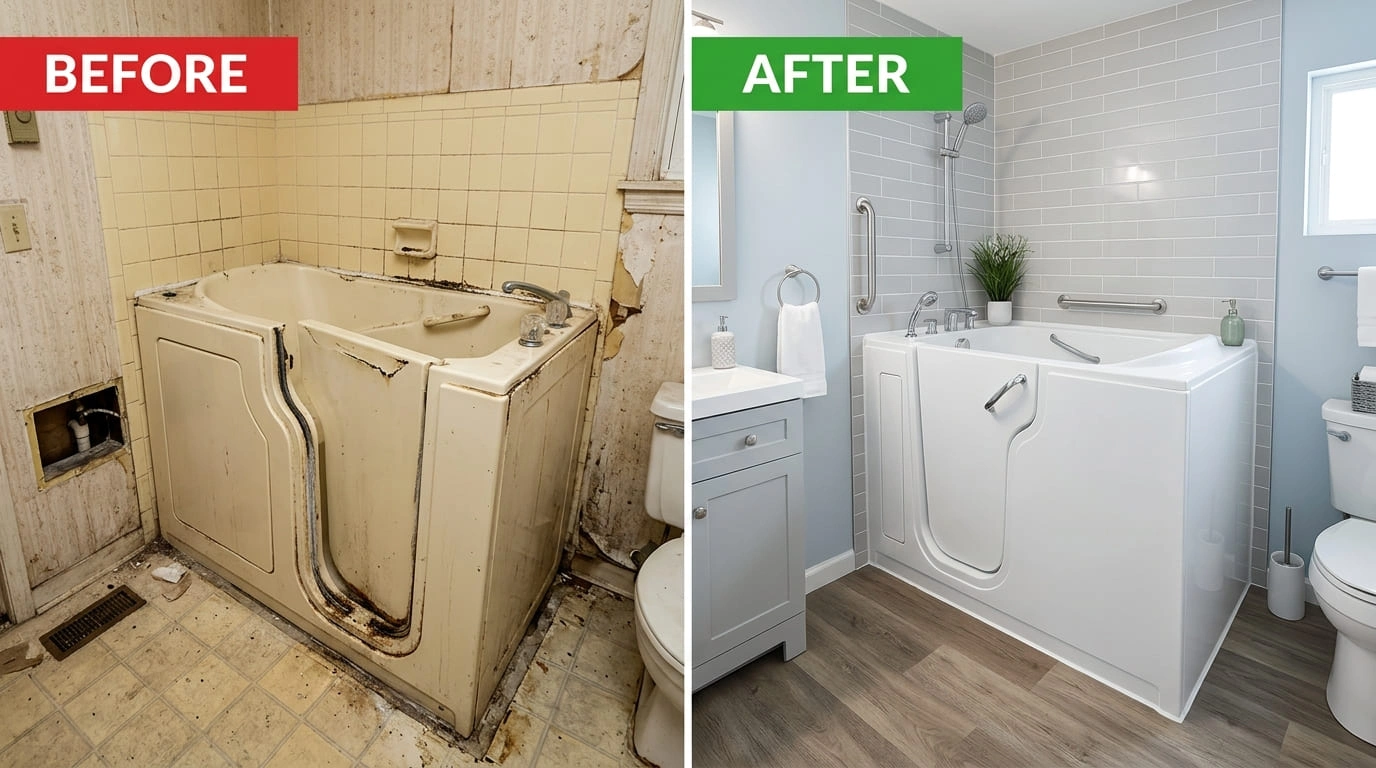
The following illustrate service objectives rather than individual customer case studies:
Water appears near the door, but the source is unclear.
The source is identified and the approved repair is checked.
The tub drains more slowly than it used to.
The affected stopper, fixture drain, or connected plumbing is evaluated and addressed within the agreed scope.
An owner is unsure whether repair is worth pursuing.
The decision reflects findings, parts availability, repair cost, and replacement requirements.
A replacement is considered without checking bathroom access.
The project accounts for measurements, delivery, connections, and finishing work.
How We Approach Walk-in Tub Repairs and Replacement Connections
The Right Part Must Match the Model and the Installation
A seal that looks similar is not automatically a suitable replacement. Component selection should account for the tub's model, dimensions, attachment method, and manufacturer requirements.
Our service planning considers:
- Model-compatible seals and service components.
- Appropriate supply, waste, and overflow connections.
- Access for current and future maintenance.
- Tub support and leveling requirements.
- Protection of surrounding bathroom finishes.
- Electrical work assigned to the appropriate qualified professional.
- Leak and operating checks before concealing new connections.
Manufacturer manuals specifically emphasize level installation and testing before enclosure. Those instructions illustrate why installation details matter; the requirements for your tub come from its own documentation. For related faucet and supply connections or pipe repiping, we can address those needs alongside the tub project.
Is Your Walk-in Tub Worth Repairing?
Compare the Actual Repair with the Complete Replacement Project
A worn component does not automatically justify replacing the entire fixture. Equally, a series of costly repairs may not solve a tub that no longer suits the user or has extensive deterioration.
| Situation | When Repair May Make Sense | When Replacement Deserves Consideration |
|---|---|---|
| Localized plumbing leak | The connection is accessible and the surrounding installation is sound | Multiple areas are damaged or major access work changes the economics |
| Door-seal concern | A compatible seal is available and the door assembly is serviceable | The door or surrounding structure needs extensive work |
| Nonworking massage component | The failed part is identifiable and a suitable replacement is available | Parts are unavailable or several systems need major work |
| Slow drainage | A stopper or connected drain problem can be corrected | Replacement better meets a broader change in bathing needs |
| Changed user requirements | The current setup still works for the user | Entry, seating, or bathing preferences no longer fit |
| Older installation | Condition and parts support a sensible repair | Overall condition and project goals favor replacement |
Replacement planning should include removal, access, plumbing changes, electrical requirements, and finishing—not just the price of a new tub. If a standard bathtub or shower would better suit your needs, explore our tub-to-shower conversion or bathtub repair & replacement options.
How Much Does Walk-in Tub Repair Cost in Jacksonville?
A Useful Estimate Starts with the Fault, Access, and Available Parts
Door-seal service, an accessible drain repair, and full tub replacement are very different projects. A generic price can be misleading when the model and installation have not been assessed.
Main cost drivers include:
- Diagnostic time and access.
- Brand and model-specific parts.
- The number of affected components.
- Plumbing modifications.
- Old-tub removal and disposal.
- Electrical or finish-work coordination.
- Scheduling requirements for urgent work.
| Service Type | What the Estimate Should Explain |
|---|---|
| Diagnostic visit | Assessment scope, visit charge, and any credit toward approved work |
| Door or seal work | Part identification, availability, labor, and checks |
| Drain or supply repair | Accessible repair scope and any concealed-work limitations |
| Pump or blower-related work | Component compatibility and specialist requirements |
| Full replacement | Tub supply, removal, connections, permits if applicable, and exclusions |
| Commercial project | Access coordination, service scheduling, and unit-by-unit scope |
Cummer Jack Plumbing's listed $50-off plumbing repair offer may be relevant to qualifying work. Ask about applicability and offer terms when arranging service.
Request a Walk-in Tub Cost EstimateWhat Are the Signs You Need Walk-in Tub Repair?
Changes in Performance Are More Useful Than Guessing from Age Alone
Arrange an assessment when the fixture stops performing as it previously did or when the source of water is unclear.
Common reasons to call include:
- Repeated water on the floor after bathing.
- A door that has become difficult to latch.
- A gasket that appears displaced or damaged.
- Water appearing behind an access panel.
- Drainage that is noticeably slower.
- A stopper that will not open or close correctly.
- Weak, inconsistent, or nonworking massage features.
- A replacement proposal that leaves you unsure whether repair was considered.
If the tub no longer meets the user's needs, ask about replacement or a tub-to-shower conversion rather than repairing a configuration that remains unsuitable.
Commercial Walk-in Tub Repair for Jacksonville Properties
Coordinate Fixture Repairs Without Losing Sight of Building Operations
For managed residential properties and facilities with walk-in bathing equipment, the repair involves more than arranging access to a bathroom. Managers may need clear approval steps, unit identification, scheduling coordination, and itemized records.
Cummer Jack Plumbing provides commercial plumbing support and assesses walk-in tub projects according to the equipment and site requirements.
| Commercial Service | Project Focus |
|---|---|
| Existing-fixture assessment | Identify symptoms, equipment, and accessible plumbing |
| Connection repairs | Address approved supply, waste, and overflow work |
| Component coordination | Establish model-specific service requirements |
| Replacement planning | Review access, connections, removal, and project dependencies |
| Maintenance planning | Organize future checks around equipment guidance and use |
Relevant customers may include apartment operators, managed housing providers, hospitality properties with installed units, and facilities with compatible bathing equipment.
For owners arranging commercial plumbing repair in Jacksonville, we can discuss the tub issue alongside related drain, supply, or fixture concerns.
| Project Situation | Scheduling Consideration |
|---|---|
| Multiple affected units | Identify each unit and approve work individually |
| Occupied property | Coordinate access and communication |
| Limited bathroom availability | Discuss disruption before scheduling |
| Specialized facility | Establish site procedures and equipment requirements |
Why Arrange Professional Walk-in Bathtub Service?
Understand What Failed Before Paying for What Comes Next
Professional service is valuable when it replaces uncertainty with a defined scope—not when it turns every problem into a replacement sale.
Benefits include:
- Distinguishing a door issue from a plumbing leak.
- Identifying whether a part is compatible and available.
- Evaluating the connected drain rather than assuming the tub is at fault.
- Understanding repair costs alongside replacement requirements.
- Keeping an explanation of the work for future reference.
- Recognizing when manufacturer or electrical support is needed.
The goal is a practical decision based on your equipment, bathroom, and intended use.
What Should You Avoid When a Walk-in Tub Malfunctions?
Do Not Force the Door, Bypass Protection, or Experiment with Live Equipment
Walk-in tubs with powered features combine plumbing and electrical components. Manufacturer manuals warn against servicing energized equipment, operating without the suction guard, and using equipment with faulty electrical protection. Follow the instructions for your particular tub.
Safety Warnings
- Do not repeatedly reset a tripping electrical protective device to keep the tub running.
- Do not reach into wet equipment areas or handle electrical components while wet.
- Do not overtighten door hardware in an attempt to force a seal.
- Do not bypass controls or substitute unapproved components.
- Do not mix cleaning chemicals or apply a cleaner without checking compatibility.
- Follow the manufacturer's drain-before-opening instructions.
If someone is trapped, injured, or in immediate danger, call emergency services. For a plumbing problem without immediate personal danger, call Cummer Jack Plumbing for guidance.
Arrange a Professional Tub AssessmentAnswers to Common Jacksonville Walk-in Tub Questions
Clear Guidance on Leaks, Drainage, Components, and Replacement
A visual check alone may not identify the problem. The assessment can include seal condition, door alignment, installation level, and model-specific door-drain arrangements. The appropriate checks depend on the tub. Call (904) 227-4220 for a professional walk-in tub assessment.
Potentially. The existing model must be identified, a suitable part must be available, and the door assembly must be serviceable. Replacing a seal will not solve a separate plumbing leak.
The timing helps narrow the diagnosis, but it does not identify the cause by itself. Tell us the approximate water level and whether the jets were running when calling our team.
Accessible supply connections, waste fittings, pump connections, or other components may need inspection. Manufacturer documentation specifically identifies fittings, unions, and O-rings as possible leak-check areas. Our water leak detection service can help pinpoint the source.
The issue may involve the stopper, fixture drain, connected bathroom plumbing, or model-specific drainage equipment. Not every walk-in tub contains a powered drain. Our drain cleaning service can determine whether the problem is the fixture or the connected plumbing.
Sometimes. The decision depends on diagnosis, access, compatibility, and available parts. Water pumps and air blowers are separate systems with different replacement requirements.
Call with the brand, model, and symptoms. We can discuss whether the requested work fits our service scope and whether manufacturer involvement is needed. Call (904) 227-4220.
That can be considered as a separate bathroom project. Measurements, removal access, plumbing connections, electrical changes, and finish work determine the scope. Explore our tub-to-shower conversion, bathtub repair & replacement, and bathroom remodeling services.
The answer depends on the work. Jacksonville lists exemptions for some leak repairs and fixture work, while also identifying regulated alterations and plumbing work that require permits. The complete scope and jurisdiction should determine the approach.
The property address, brand and model, symptom description, approximate age, and accessible photographs are useful. Mention active leaking or any electrical concern immediately when calling (904) 227-4220.
Clear Recommendations from the First Assessment to the Final Handover
Understand the Work Before You Authorize It
Cummer Jack Plumbing's approach is straightforward: listen to the problem, assess the existing fixture, explain the available options, and define the approved work.
Before a repair or replacement proceeds, discuss the scope, price, expected limitations, and applicable written terms. If the reported symptom returns after service, contact us with the invoice details so the concern can be reviewed against the completed work and applicable coverage.
Cummer Jack Plumbing
735 Lane Ave N
Jacksonville, FL 32254
United States
Plumbing Credentials and Specialist Coordination
The Required Expertise Depends on the Actual Repair
A supply-line repair, fixture replacement, and electrical control problem may involve different responsibilities. The project should be assigned according to its scope rather than treating every walk-in tub component as ordinary plumbing.
Relevant project considerations include:
- Plumbing-contractor qualifications for regulated plumbing work.
- Appropriately supervised field personnel.
- Electrical expertise for electrical alterations or faults.
- Manufacturer-specific support for proprietary components.
- Permit and inspection coordination where required.
Jacksonville's Building Inspection Division provides contractor and permitting guidance. The city also explains that inspections for permitted work may need to occur before affected work is concealed.
Learn more about our team and the qualifications behind our plumbing services.
Emergency Walk-in Tub Plumbing Service in Jacksonville
Active Leaking Deserves a Different Response from a Routine Upgrade
If water is escaping from the fixture or a supply connection, call and describe what is happening. We will discuss the urgency, whether the tub is occupied, and any immediate access or safety concerns.
Our emergency-service intake includes:
- A description of the leak or malfunction.
- Identification of immediate personal or electrical danger.
- Scheduling or dispatch discussion based on the situation.
- On-site plumbing assessment and mitigation where appropriate.
- Repair planning when specialized parts or additional work are required.
Urgent scenarios include:
- An active supply leak.
- Water spreading beyond the bathroom.
- A fixture that cannot be shut off normally.
- A leak associated with powered equipment.
Twenty-four-hour availability does not mean every proprietary part is available overnight. If water damage has already occurred, our water damage restoration service can help with the affected areas.
Call for Urgent Plumbing Assistance: (904) 227-4220Walk-in Tub Leak Documentation for Insurance Discussions
Keep the Plumbing Findings Separate from Coverage Decisions
If a tub-related leak has damaged surrounding materials, clear records can help you explain the incident to your insurer.
Discuss available documentation such as:
- Photographs of accessible affected areas.
- Notes describing the reported symptom and observed condition.
- The identified plumbing repair.
- Itemized repair or replacement invoices.
- Recommendations for additional evaluation where damage extends beyond the plumbing scope.
The cause should be described only as far as the findings support it. Insurance coverage, deductibles, exclusions, and claim decisions depend on the policy and insurer. Plumbing documentation is not a guarantee of reimbursement.
Walk-in Tub Parts and Workmanship Warranty Considerations
Manufacturer Coverage and Repair Labor Are Not Always the Same
Before authorizing work, distinguish the original tub warranty from the terms attached to a new part or service.
Manufacturer policies may treat the shell, door seal, controls, labor, commercial use, and ownership transfer differently. Specific manufacturer documentation illustrates these distinctions, but its terms should not be applied to another brand or model.
| Coverage Category | What to Review |
|---|---|
| Existing product warranty | Model, purchaser eligibility, and claim procedure |
| Replacement part | Covered defects, duration, and supplier terms |
| Repair workmanship | The written labor coverage attached to the approved work |
| Access and removal | Whether opening, removal, or reinstatement costs are excluded |
| Commercial installation | Whether different terms apply |
| Service records | Invoices and identification details needed for a future claim |
Ask about manufacturer authorization before arranging work you expect a product warranty to reimburse.
Six Equipped Service Vans Supporting Jacksonville Plumbing Needs
Preparation Starts with Knowing What Equipment You Own
Cummer Jack Plumbing's six service vans support a team of 60 skilled professionals serving residential and commercial plumbing customers.
The most useful preparation begins before the appointment. Brand information, photographs, and a precise symptom description help establish what the visit may require.
Service planning considers:
- Access to the fixture and plumbing.
- Tools appropriate to the proposed assessment.
- Common plumbing materials versus proprietary components.
- Part identification and ordering requirements.
- Whether a follow-up visit or specialist coordination is necessary.
We do not assume every walk-in tub part can be carried on a van or that every problem can be completed in one visit.
Payment and Budget Planning for Walk-in Tub Replacement
Compare the Full Scope Before Choosing How to Pay
When replacement involves more than the fixture itself, budgeting should include removal, installation, plumbing changes, electrical work, and finishes.
Ask our office about accepted payment methods and whether any project-specific payment arrangements are available. Financing should not be assumed unless a specific option and its terms have been provided.
Before entering a financing agreement:
- Review the total project price.
- Separate required work from optional upgrades.
- Understand interest, fees, and repayment terms.
- Review any lender eligibility requirements.
- Check how change orders affect the financed amount.
What Matters When Choosing a Jacksonville Plumbing Company?
Look Beyond Recognition to the Scope, Communication, and Result
A walk-in tub repair decision should rest on the provider's ability to explain the problem and perform the agreed work. Recognition alone does not establish component compatibility, repair suitability, or warranty coverage.
When evaluating Cummer Jack Plumbing for your project, focus on:
- Whether the existing tub will be assessed before replacement is recommended.
- Whether the proposed repair is clearly described.
- Whether limitations and specialist requirements are explained.
- Whether the estimate separates included and excluded work.
- Whether you know who to contact after the visit.
Ask About Eligible Discounts on Walk-in Tub Plumbing Work
Review Applicable Offers Before Approving the Service
If you are arranging work for a parent, managing a fixed household budget, or asking about military-related savings, mention that when contacting our office. Ask which current offers apply; a dedicated senior or military discount is not assumed.
Cummer Jack Plumbing's listed promotions include:
- $50 off qualifying plumbing repair.
- A free in-home water quality test.
- Other service-specific offers that may apply to separate plumbing work.
Confirm eligibility, exclusions, minimum charges, and whether offers can be combined. A water-heater or drain promotion should not be treated as a walk-in tub replacement discount unless its terms expressly allow it.
Cummer Jack Plumbing Service Hours in Jacksonville, FL
24/7 Contact Availability for Plumbing Repairs and Emergencies
Call any day to discuss a leaking tub, drainage concern, or replacement project. Urgent problems and planned installations are scheduled according to their different requirements.
| Day | Availability |
|---|---|
| Monday | 24 hours |
| Tuesday | 24 hours |
| Wednesday | 24 hours |
| Thursday | 24 hours |
| Friday | 24 hours |
| Saturday | 24 hours |
| Sunday | 24 hours |
Phone: +1 (904) 227-4220
Email: cummerjacksonplumbing@gmail.com
Website: emergencyplumberjacksonvillefl.com
Special-order components, manufacturer assistance, and permit-related activities may follow separate schedules.
How to Compare Walk-in Tub Repair Providers in Jacksonville
Ask the Same Practical Questions Before Choosing a Company
A fair comparison examines confirmed capabilities and the proposed scope. It should not assume another company lacks experience, tools, or availability.
| Comparison Question | What to Discuss with Cummer Jack Plumbing | What to Ask Any Provider |
|---|---|---|
| Will you assess an existing tub? | Explain the brand and symptom | Is the company offering repair, replacement, or both? |
| What is included? | Review the proposed visit and repair scope | Are parts, access work, and checks itemized? |
| Can the needed part be sourced? | Discuss compatibility and lead time | Is the part appropriate for the model? |
| Is specialist work required? | Clarify plumbing versus other responsibilities | Who handles electrical or proprietary equipment? |
| What does replacement include? | Review removal, connections, and exclusions | Are disposal and finishing work included? |
| What happens after service? | Ask about records and written terms | Who handles follow-up concerns? |
| How is urgent work handled? | Call our 24/7 number | Does availability include the work you need? |
Contact Cummer Jack Plumbing for Walk-in Tub Service in Jacksonville
Tell Us What Happens When You Fill, Use, or Drain the Tub
You do not need to diagnose the problem before calling. Tell us whether the door leaks, water appears underneath, the drain runs slowly, or a powered feature has stopped working. We will discuss the existing fixture and the next appropriate step.
For replacement inquiries, let us know whether you want another walk-in tub, a standard bathtub, or a shower conversion. That helps frame the project around your needs rather than a one-size-fits-all installation.
Contact Cummer Jack Plumbing
(904) 227-4220
cummerjacksonplumbing@gmail.com
Walk-in Tub Repair & Replacement
735 Lane Ave N
Jacksonville, FL 32254, USA
24/7 Emergency Service Available
Current Special Offers
- $29 Water Heater Flush & Maintenance
- $50 Off Any Plumbing Repair
- $99 Drain Clearing Special
- Free In-Home Water Quality Test
- Up to $500 Off Water Heater Replacement
Choose a practical next step for your bathroom with walk-in tub repair and replacement in Jacksonville, FL, from Cummer Jack Plumbing.
Walk-in Tub Plumber — Service Area Coverage Near Jacksonville FL
When you need walk-in tub plumbing in Jacksonville, our team of 60 professionals responds across Northeast Florida with 6 fully equipped service vans. We serve Jacksonville Beach, Orange Park, St. Augustine, and all surrounding areas.