Water Leak Detection Service in Jacksonville, FL — Hidden Pipe Leaks, In-Wall Supply Lines & Underground Water Line Diagnosis
Same-Day Water Leak Detection in Jacksonville — Serving Riverside · Avondale · Arlington · Baymeadows · Mandarin · Southside · Jacksonville Beach Since 2010
In Northeast Florida, a hidden water leak is a race against the clock. American Leak Detection of Jacksonville confirms the local urgency: "with our high humidity and heat, a small leak behind a wall can turn into a major mold problem or structural issue in a matter of days." Jacksonville's 60–70% year-round indoor humidity means a slow drip inside a wall cavity doesn't dry between events — it feeds continuous mold growth at the rate that Jacksonville's subtropical climate allows. Cummer Jack Plumbing provides complete water leak detection Jacksonville FL — non-invasive acoustic listening, thermal imaging for wall cavities, electronic line tracing for buried supply lines, and insurance documentation reporting — locating the exact leak position before any wall is opened or concrete is touched, and providing in-house repair at the confirmed location rather than exploratory demolition.
- Non-invasive detection: acoustic, thermal imaging, and electronic tracing locates leaks before any wall or floor is opened
- Insurance documentation report included — photographs, written leak location report, and repair scope for Florida homeowner's insurance adjuster
- In-house repair at the confirmed leak location — one contractor from detection through repair
- 16 years serving Jacksonville, FL — Bold City Best, Folio Best of Jax, and Angi Super Service Award winner
Request Water Leak Detection
Fill out the form below and we'll contact you immediately!
Award-Winning Water Leak Detection in Jacksonville, Florida
Duval County's Florida-licensed plumber for hidden leak detection, in-wall supply line diagnosis, and non-invasive underground water line location since 2010
Cummer Jack Plumbing, led by owner Andrew Jackson, provides water leak detection and repair for Jacksonville homeowners across Duval, Clay, St. Johns, and Nassau counties. Our Florida Certified Plumbing Contractor license means that when the detection equipment confirms the leak location, we are the licensed contractor who performs the repair — no contractor handoff, no scheduling gap, and no situation where the detection report gets disputed between a detection company and a separate repair contractor.
Water Leak Detection Throughout Jacksonville — from Riverside's Original Copper Lines to Arlington's Polybutylene and Baymeadows Irrigation Leaks
From Riverside and Avondale's aging copper supply lines to Mandarin polybutylene failures and Nassau County sandy-soil main line absorption
Cummer Jack Plumbing provides water leak detection throughout Jacksonville, Florida — from pre-war craftsman homes in Riverside, Avondale, and Springfield near Five Points and the Cummer Museum of Art & Gardens, where original copper supply lines 70 to 90 years old have developed the pinhole leaks from Jacksonville's 15.3 GPG hard water that first appear as a barely-noticeable damp spot on drywall or a musty odor inside a wall cavity, and where the sandy soil that surrounds the supply lines accelerates external corrosion simultaneously with the mineral scale attacking from inside, to Mandarin, Arlington, and Sandalwood homes built between 1978 and 1995 with polybutylene supply that fails without warning from chloramine exposure, to Baymeadows, Southside, and Argyle Forest newer construction where irrigation system leaks in Jacksonville's sandy flatwood soil absorb water rapidly and waste thousands of gallons without producing visible yard saturation until the system has been leaking for weeks, to Nassau County (Yulee, Callahan) and Clay County (Middleburg, Green Cove Springs) properties where the sandy soil absorbs underground supply line leaks so efficiently that no surface puddle appears until the leak has been running long enough to register on the JEA bill.
Historic Neighborhoods
Riverside, Avondale, Springfield — original copper supply lines 70–90 years old; hard water pinhole leaks; in-wall moisture detection
Mid-Century Neighborhoods
Arlington, Murray Hill, Mandarin, Sandalwood — polybutylene and CPVC failures; no-warning sudden failures
Slab Suburbs
Baymeadows, Southside, Argyle Forest — irrigation system leaks absorbed by sandy soil; underground supply line tracing
Nassau & Clay Counties
Yulee, Callahan, Middleburg, Green Cove Springs — sandy soil leak absorption; well-to-house supply line assessment
Nearby Service Cities
Orange Park, Fernandina Beach, Amelia Island, Ponte Vedra Beach, St. Augustine, and all of Northeast Florida
Jacksonville's Water Leak Detection Specialists — Non-Invasive Technology, Insurance Documentation & In-House Repair
The three things that determine whether leak detection produces a solution — or just a diagnosis with more questions
Jacksonville's water leak detection market has three distinctions that separate providers who find the leak and fix it from providers who find the leak and hand off a report. First, non-invasive technology before any demolition — acoustic amplifiers, thermal imaging, and electronic line tracing that locate the exact leak position within inches before any wall is opened or concrete is cut; the alternative (cutting exploratory access points to find a leak) is expensive, destructive, and unnecessary with the correct equipment. Second, insurance documentation formatted for Florida adjusters — "early detection protects your insurance position; insurers may deny a claim if they believe you should have known about a slow leak for weeks or months" (Louis Law Group Jacksonville); Cummer Jack provides a written leak location report, photographs, repair scope documentation, and post-repair pressure test results formatted for Florida homeowner's insurance adjuster submission. Third, in-house repair at the confirmed location — Cummer Jack is the licensed contractor performing both the detection and the repair, eliminating the contractor handoff that creates timeline delays and scope disputes.
Warning Signs Your Jacksonville Home Has a Hidden Water Leak
The six indicators that water is escaping somewhere in your plumbing system — and why Jacksonville's climate makes acting on them urgent
A hidden water leak in Jacksonville doesn't stay contained to the pipe — it migrates to wherever gravity and absorption take it, feeding mold in walls, saturating subfloors, and undermining the sandy foundation soil before any surface indicator appears. These are the signs that indicate a leak investigation is needed immediately:
Unexplained JEA Water Bill Spike
The most reliable first indicator — a bill that increased by 20% or more without any change in household water use should be tested with the JEA meter test before any other investigation
Sound of Running Water When All Fixtures Are Off
The hissing or trickling sound of pressurized water escaping through a pipe crack or pinhole inside a wall, floor, or buried line
Damp or Staining on Drywall
Discoloration, peeling paint, or visible moisture on a wall or ceiling with no obvious surface source — by the time drywall shows visible moisture, the wall cavity has been wet long enough for mold to establish
Musty Odor in a Specific Room
Mold feeding on hidden moisture — in Jacksonville's 60–70% indoor humidity, hidden moisture doesn't need long to support mold; a persistent musty smell in one area despite cleaning is nearly always a hidden moisture source
Warm Floor Zones (Hot Water Line Leaks)
A hot water supply line leak heats the floor surface above it — "a hot water line leak doesn't just waste water; it wastes the energy used to heat it, forcing your water heater to run almost constantly, causing premature wear and a significant spike in your JEA bill" (Buehler Plumbing Jacksonville)
Low Water Pressure Without Identified Cause
A supply line leak reduces the pressure reaching fixtures — if pressure has dropped at multiple fixtures simultaneously without any known cause, a supply line leak is among the primary diagnoses
Who Our Jacksonville Water Leak Detection Service Is For
Homeowners with JEA bill spikes, in-wall moisture, and underground supply line concerns across Duval County
How Jacksonville's Sandy Soil, Hard Water, Chloramine & Humidity Create a Perfect Hidden Leak Environment
Four Jacksonville conditions that make water leaks hide longer and cause damage faster than in most markets
Sandy Soil Absorbs Leaking Water Before It Surfaces
Jacksonville is built on sandy flatwood soil — a substrate that absorbs water rapidly and distributes it horizontally rather than allowing it to pool visibly at the surface. American Leak Detection of Jacksonville confirms the specific consequence: "the sandy soil in Nassau County absorbs water quickly, meaning an irrigation or main line leak might not show puddles until thousands of gallons are wasted." This same soil condition applies throughout most of Duval County — underground supply line leaks, slab-perimeter leaks, and irrigation system failures all absorb into Jacksonville's sandy soil for weeks or months before a surface indicator appears.
15.3 GPG Hard Water and Pinhole Leaks
Jacksonville's Floridan Aquifer water at 15.3 GPG deposits mineral scale inside copper pipes and corrodes the pipe exterior from the soil chemistry simultaneously. In copper supply lines inside walls or beneath slabs, this produces the pinhole leaks that appear first as a slight damp spot on drywall or a musty odor — by which point the wall cavity has been wet long enough that mold colonies are already established behind the surface. RiverCity Plumbing Jacksonville confirms: "pinhole leaks in copper supply lines inside wall cavities are common in Jacksonville homes with hard water. The first sign is often a water stain on drywall or a musty odor — by which point mold is already growing behind the surface." To protect supply lines from future hard water damage, consider our water softener repair and replacement service.
JEA Chloramine and Polybutylene/Rubber Seal Failures
JEA's chloramine disinfectant is chemically more aggressive on rubber compounds and certain plastics than the free chlorine used in other water systems. Polybutylene pipe — found in thousands of Jacksonville homes built between 1978 and 1995 — is particularly vulnerable to chloramine attack, producing failures that occur suddenly rather than gradually. RiverCity Plumbing Jacksonville's 2026 leak detection guide identifies this: "In 2026, many Florida insurance companies are refusing to renew policies for homes with polybutylene pipes — notorious for sudden, total failure due to the chlorine in our city water." When detection confirms polybutylene is the source, pipe repiping repair and replacement is the recommended whole-system solution if leak detection confirms aging galvanized, polybutylene, or CPVC throughout the system.
Subtropical Humidity and Mold Timeline
Jacksonville's 60–70% year-round indoor humidity is why hidden water leaks here are more urgent than in drier climates. In a dry-climate city, a slow leak behind drywall might remain contained as the building materials absorb and partially dry the moisture between wet events. In Jacksonville, where indoor humidity is consistently near the moisture threshold for mold growth, a hidden leak never gets a drying period — it feeds continuous mold growth from the first wet event. American Leak Detection Jacksonville states this directly: "with our high humidity and heat, a small leak behind a wall can turn into a major mold problem or structural issue in a matter of days."
Slab Leaks, In-Wall Supply Leaks, Underground Service Lines & Appliance Connection Leaks in Jacksonville, FL
Understanding which type of leak your Jacksonville home has — and which detection method locates it
| Leak Type | Most Common Cause in Jacksonville | Surface Indicator | Detection Method |
|---|---|---|---|
| In-wall supply line (copper pinhole) | 15.3 GPG hard water corrosion from inside; soil corrosion from outside | Damp drywall, musty odor, wall staining | Thermal imaging for hot line; moisture meter for cold line |
| Under-slab supply line | Floridan Aquifer mineral corrosion; sandy soil movement | JEA bill spike; warm floor (hot line); damp at slab perimeter | Acoustic + thermal — see slab leak detection page |
| Underground service line (meter to house) | Root intrusion; soil movement; aging pipe; JEA meter-confirmed leak | JEA bill spike; wet yard (if severe); no indoor symptoms | Electronic line tracing + pressure isolation |
| Appliance connection | Chloramine O-ring degradation; kinked or aged supply hose | Water under appliance; damp subfloor at appliance location | Visual inspection + moisture meter |
| Second-floor bathroom supply or drain | Pipe connection failure; wax ring; drain assembly | Ceiling stain below bathroom | Plumbing inspection + targeted moisture assessment |
| Irrigation system supply line | Root intrusion in sandy soil; valve failure | High JEA water bill; no visible wet zones (sandy soil absorption) | Electronic tracing + pressure zone testing |
| Water heater supply or discharge | JEA chloramine O-ring degradation at fitting connections | Moisture around water heater; JEA bill spike if continuous drip | Visual + moisture meter at water heater connections |
Our 6-Step Water Leak Detection Process in Jacksonville, FL
From JEA meter test through technology deployment, exact location marking, insurance documentation, and targeted repair
JEA Meter Test and Initial Triage
We start with the JEA meter test — confirming that the meter moves with all fixtures and appliances off (confirming an active leak), then isolating whether the leak is in the house-side supply system or the service line between the meter and the house by testing the house-side shutoff. This meter test sequence takes 15 to 20 minutes and narrows the detection to the correct section of the system before equipment is deployed.
Customer Interview and Observation Review
We review the customer's observations — where the JEA bill spike first appeared, whether any sounds have been heard, where any damp spots or odors have been noticed, and when each symptom started. A symptom that started after a specific event (construction nearby, hurricane, JEA main repair in the neighborhood) narrows the leak type and location. A symptom that developed gradually over months without event correlation points to age and water chemistry causes.
Visual Inspection and Risk Zone Identification
We visually inspect the home's most likely leak zones — under sinks, at appliance connections, at the water heater, at the main shutoff valve, and in any areas where symptoms have been observed. We identify the highest-probability leak zones for equipment deployment based on pipe material, home age, and symptom location.
Non-Invasive Detection Technology Deployment
Based on the leak type and location probability, we deploy the appropriate detection technology: acoustic amplification for under-slab and buried supply line leaks; thermal imaging for wall cavity hot-water line leaks; moisture meters for specific wall sections where damp drywall is observed; and electronic pipe tracing for underground service line assessment. Detection equipment is deployed before any wall opening or excavation — confirming the exact leak location first.
Leak Location Marking and Insurance Documentation
We mark the confirmed leak location above ground, measure and document the exact position for repair access, and prepare the detection documentation package — photographs of detection equipment readings, written leak location description, pipe type and suspected cause assessment, and repair scope recommendation — formatted for Florida homeowner's insurance adjuster submission.
Targeted Repair at Confirmed Location and Pressure Test
We execute the repair at the single confirmed access point — not exploratory demolition. After repair, we pressure-test the section to confirm the leak is fully resolved. Post-repair pressure test results are included in the insurance documentation package.
What's Included in Our Jacksonville Water Leak Detection Service
From JEA meter test through detection technology, location marking, insurance documentation, and targeted repair
- JEA meter test — active leak confirmation and leak section isolation (house-side vs. service line)
- Customer interview and symptom review
- Visual inspection of highest-probability leak zones
- Acoustic amplification where under-slab or buried leak is suspected
- Thermal imaging for wall cavity hot-water line assessment
- Electronic pipe tracing for underground service line location
- Moisture meter assessment at suspected damp zones
- Confirmed leak location marking above ground
- Insurance documentation package: photographs, written leak report, repair scope, and post-repair pressure test
- Targeted repair at the confirmed single access point
- Post-repair pressure test confirming full leak resolution
Jacksonville's Trusted Water Leak Detection Team
Non-invasive technology, detection-to-repair under one license, insurance documentation — the leak detection service that finds the leak and fixes it
When a Jacksonville plumber arrives without detection equipment and says "I'll need to open the wall to find it" — they're offering exploratory demolition instead of leak detection. Non-invasive acoustic, thermal, and electronic detection locates leaks before any wall is opened. Cummer Jack Plumbing carries detection equipment on service vehicles and performs in-house repair at the confirmed detection point, without contractor handoff or scheduling gap.
Before & After Water Leak Detection in Jacksonville, FL
From unexplained JEA spikes and musty odors to confirmed leak locations, targeted repairs, and insurance-documented resolution
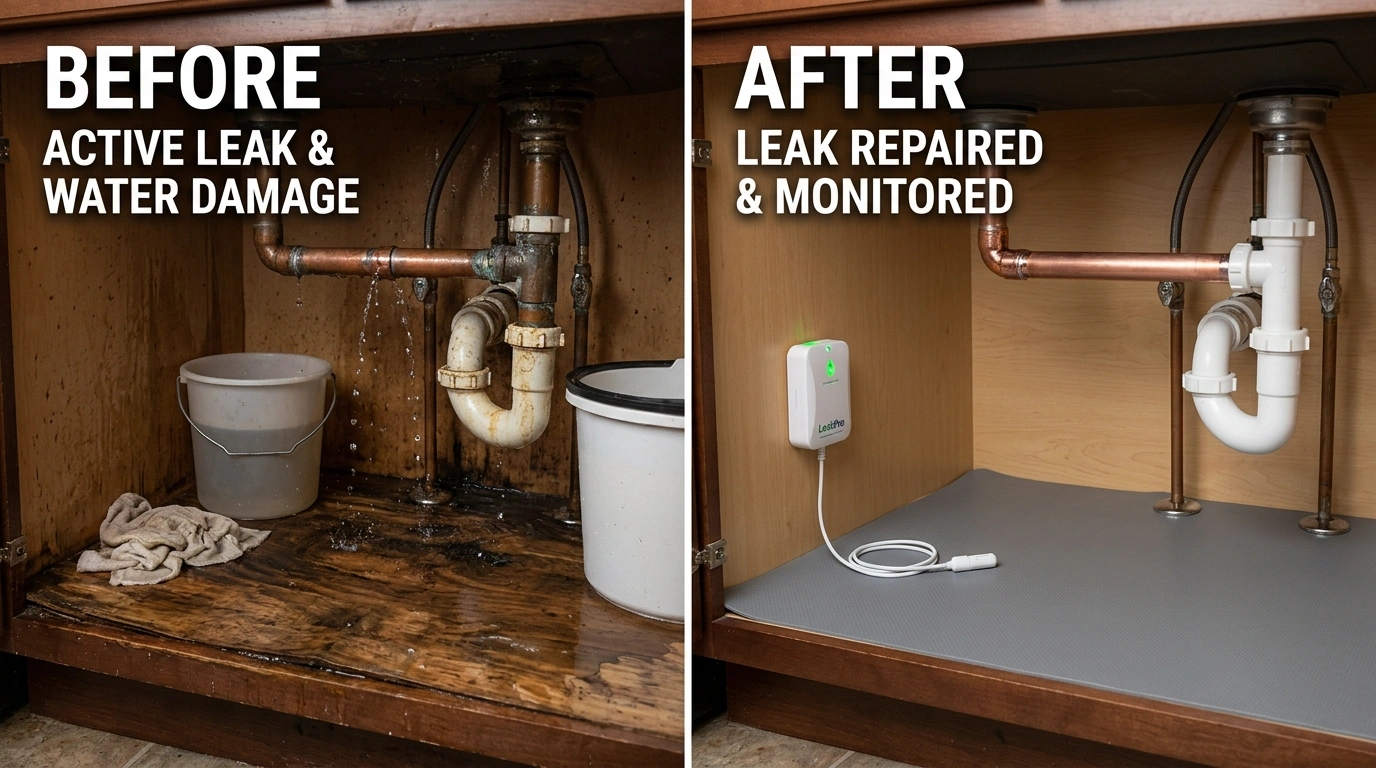
Riverside — Copper Pinhole Leak
A Riverside homeowner noticed a musty smell in the second bedroom that persisted despite cleaning — JEA bill was $45 higher than the same month the previous year. Thermal imaging of the bedroom wall identified a 4°F temperature differential running along the hot supply line behind the drywall. Moisture meter confirmed elevated moisture content at the warm zone. Access point opened at the confirmed location — pinhole leak in 1-inch copper supply found at a 90-degree elbow where the hard water had thinned the pipe wall over 70 years. Section replaced, wall patched, post-repair pressure test confirmed resolution. Insurance documentation package provided to homeowner.
Baymeadows — Underground Service Line
A Baymeadows homeowner's JEA bill increased by $80 for three consecutive months with no interior symptoms. JEA meter test confirmed active leak with house-side shutoff closed — leak was therefore in the service line between the meter and the house. Electronic line tracing located the service line path. Acoustic detection identified the leak point at 34 feet from the meter where root intrusion from a crape myrtle had cracked the PVC service line. Targeted excavation at the GPS-marked location. Service line section replaced, backfilled same day, pressure test confirmed resolution.
Arlington — Failed Compression Fitting
An Arlington homeowner heard running water inside the wall adjacent to the laundry room. Investigation with moisture meter confirmed elevated moisture content in the wall cavity. Thermal imaging was inconclusive (cold water line). Acoustic equipment identified the sound of pressurized water escaping at a specific stud bay. Access confirmed a failed compression fitting on the cold supply to the washing machine connection. Fitting replaced — no exploratory demolition beyond the single access point.
Leak Detection Technology for Jacksonville, FL
Acoustic amplifiers, thermal imaging cameras, electronic tracers, and moisture meters — the non-invasive toolkit for Jacksonville's hidden leak environment
Acoustic Ground Microphones & Contact Sensors
Amplify the specific sound frequency of pressurized water escaping through pipe, concrete, or drywall. The primary detection method for slab leaks and buried supply line leaks — identifies leak position to within a few inches through concrete.
Infrared Thermal Imaging Camera
Detects temperature differentials through drywall and flooring surfaces caused by hot water line leaks. Identifies the thermal plume above a leaking hot water pipe without wall penetration. Does not identify cold-water line leaks directly.
Electronic Pipe Locator & Tracer
Traces buried supply pipe paths above ground by signal injection. Identifies pipe route and the point where continuity interruption indicates the leak position for underground service lines.
Moisture Meter
Measures the moisture content of drywall, wood framing, and flooring materials. Confirms elevated moisture at specific locations that thermal imaging has identified. Provides quantified moisture readings for insurance documentation.
Digital Pressure Gauges & Isolation Valves
Isolates specific sections of the supply system and monitors pressure decay over time. Confirms which section contains the active leak and estimates leak severity before detection equipment is deployed.
Florida Homeowner's Insurance and Water Leak Detection — What Coverage to Expect and What Documentation You Need
Most Florida policies cover ensuing damage but not the pipe itself — and early detection protects your coverage position
Florida homeowner's insurance coverage for water leak damage is nuanced, and what Cummer Jack provides at every detection visit — the documentation package — is what determines whether a Jacksonville homeowner's claim is approved or questioned.
Estimate Your Water Leak Detection Cost in Jacksonville, FL
From a meter-confirmed service line assessment to full acoustic, thermal, and electronic detection
Jacksonville water leak detection costs depend on the detection method required, the number of leak zones assessed, and the complexity of the pipe system. We provide a transparent assessment scope before any equipment is deployed.
| Service | Jacksonville Cost Range |
|---|---|
| Leak detection service (single-method, localized) | ~$100 – $300 |
| Comprehensive leak detection (multi-method, whole house) | ~$200 – $600 |
| Leak detection with immediate minor repair | ~$250 – $700 |
| Insurance documentation package | Included with every visit |
| In-wall pipe repair (after detection) | ~$200 – $600 depending on access and pipe type |
| Service line leak repair (after detection) | ~$500 – $2,500 depending on length and depth |
| Slab leak detection (acoustic + thermal) | See Slab Leak Detection page for specific pricing |
National leak detection cost range: $100 to $1,000 depending on leak type (United Water Restoration Group Jacksonville 2026). Most Jacksonville hidden leak investigations fall in the $200–$500 detection range before repair scope.
Who Needs Water Leak Detection in Jacksonville, FL?
JEA bill spikes, musty odors, damp drywall, and sound of running water — the four situations that warrant immediate professional assessment
Benefits of Professional Water Leak Detection in Jacksonville, FL
Non-invasive location, targeted repair, insurance documentation, and the early intervention that prevents Jacksonville's worst hidden leak outcomes
Non-Invasive Precision
Detection technology finds the leak without opening walls at random — the single targeted access point at the confirmed detection location vs. exploratory cuts throughout the wall or floor
Insurance Protection
Early detection protects your insurance coverage position — Florida insurers may deny ensuing-damage claims if the leak evidence suggests the homeowner should have known about it sooner; acting at the first symptom documents the earliest reasonable discovery date
Full Insurance Documentation
Insurance documentation package at every detection visit — photographs, written report, repair scope, and post-repair pressure test results formatted for Florida homeowner's insurance adjuster submission
Hot Line Leak — Stop JEA Waste
Hot water line leak detection specifically prevents the compounding JEA bill damage — "a hot water line leak wastes energy used to heat it and forces your water heater to run almost constantly, causing premature wear" (Buehler Plumbing Jacksonville)
Mold Prevention
The 24-to-48-hour window before mold establishes in a wet wall cavity in Jacksonville's humidity means early detection is the difference between a plumbing repair and a plumbing repair plus mold remediation
Your JEA Water Bill Spiked in Jacksonville — Is It a Hidden Water Leak? Here's the Step-by-Step Check
An unexplained JEA water bill increase is the most common first indicator of a hidden water leak in a Jacksonville home — because a pressurized supply line leak runs water continuously, 24 hours a day, regardless of household use. The amount of water wasted depends on the size of the leak and the system pressure, but even a small pinhole leak in a half-inch copper supply line can waste thousands of gallons per month, producing the 20 to 50% JEA bill increase that Jacksonville homeowners often attribute to rate increases or meter errors before they investigate the plumbing. The following sequence confirms whether the bill spike is from a leak.
1 The 15-Minute JEA Meter Test
Turn off every water-using fixture and appliance in the home — every toilet, faucet, ice maker, dishwasher, washing machine, irrigation system, outdoor hose bib, and any appliance connected to the water supply. Go to your JEA water meter (in a concrete box near the property line, marked "JEA") and watch the meter dial or digital display for 15 minutes. If the reading moves with everything off, you have an active leak somewhere in the water supply system. If it stops, the apparent bill increase may be from a slow-running toilet (the most common non-leak cause of JEA bill spikes).
2 Isolating the Leak to the Service Line or Interior Supply
Once the meter test confirms an active leak, the second test isolates whether the leak is in the interior house supply or the service line between the JEA meter and the house. Turn off the main water supply shutoff valve inside the home (typically near the water heater or where the supply line enters the home). Return to the JEA meter. If the meter stops moving, the leak is in the interior house supply system — water was no longer flowing through the meter because the shutoff valve stopped it. If the meter continues moving with the house shutoff closed, the leak is in the service line between the meter and your home's shutoff valve — requiring water line repair and replacement.
3 What a Stopped Meter (with Fixtures Off) Means
If the JEA meter stops when all fixtures are off, the apparent bill increase is likely from a slow-running toilet, a dripping faucet, or a leak that has stopped by the time of the test. The toilet dye test is the next step: drop food coloring in the toilet tank, wait 15 minutes without flushing, and check the bowl. If color appears, the flapper is leaking continuously — a running toilet is the second most common cause of JEA bill spikes after hidden supply line leaks.
4 Hot Water Line vs Cold Water Line Leak Indicators
Once a leak is confirmed, the type of leak provides direction for the detection equipment. A hot water line leak in the home produces a warm zone on the floor or wall near the leak — detectable by thermal imaging or bare feet on tile. It also causes the water heater to run more frequently than normal, which shows up as a higher JEA gas or electric bill alongside the water bill increase. A cold water line leak produces no temperature differential at the surface — it requires acoustic equipment or moisture meter detection to locate without wall access.
5 Insurance Protection From Early Detection
"Early detection protects your insurance position; insurers may deny a claim if they believe you should have known about a slow leak for weeks or months" (Louis Law Group Jacksonville). If a JEA bill spike or other leak indicator has been present for multiple billing cycles before a professional assessment is called, the insurance adjuster may use that timeline to limit the ensuing-damage coverage period. Calling for leak detection at the first billing cycle that shows an unexplained increase establishes the earliest reasonable discovery date and protects the full coverage period.
6 Why Jacksonville's Sandy Soil Hides Underground Leaks
For underground service line leaks in Jacksonville's sandy flatwood soil, the JEA meter test is often the only indicator — because the sandy soil absorbs leaking water so efficiently that no surface puddle appears until the leak has been running long enough to saturate a significant soil volume. American Leak Detection Jacksonville confirms: "the sandy soil absorbs water quickly, meaning an irrigation or main line leak might not show puddles until thousands of gallons are wasted." For service line leaks confirmed by the meter test variation above, electronic pipe tracing is the correct detection method — it maps the pipe path and the leak position above ground before any soil is disturbed.
Water Leak Detection FAQs for Jacksonville, FL Homeowners
Answers about the JEA meter test, detection costs, what causes hidden leaks, and insurance coverage
The most reliable first test is the JEA meter test: turn off all water-using fixtures and appliances and watch your JEA water meter for 15 minutes. If the meter continues moving with everything off, you have an active leak somewhere in the supply system. Supporting indicators include an unexplained JEA bill increase of 20% or more, the sound of running water when no fixtures are in use, a musty odor in a specific room, damp or staining on drywall or a ceiling, or a warm floor zone that indicates a hot water supply line leak.
Leak detection in Jacksonville runs $100 to $600 depending on the detection method and the number of zones assessed. Single-method localized detection runs $100 to $300. Comprehensive multi-method whole-house assessment runs $200 to $600. These ranges are confirmed by United Water Restoration Group Jacksonville's 2026 pricing data. Insurance documentation is included with every detection visit. Repair cost is quoted separately at the confirmed detection location after the leak is found.
Most Florida homeowner's insurance policies cover "ensuing damage" — damage to drywall, flooring, and building materials caused by a leak — but typically do not cover the pipe repair itself or the cost of leak detection. For slab leaks, many Florida policies cover the "access and egress" cost — the expense of breaking concrete to reach the pipe. Insurance may deny a claim if the evidence suggests the homeowner should have discovered the leak sooner. Cummer Jack provides a complete documentation package with every detection visit — photographs, written location report, repair scope, and post-repair pressure test results — formatted for Florida insurance adjuster submission.
Three Jacksonville-specific conditions allow water leaks to remain hidden longer than in most markets. First, sandy flatwood soil absorbs underground leaks rapidly — no puddle appears at the surface until significant soil volume is saturated. Second, hard Floridan Aquifer water (15.3 GPG) creates pinhole leaks in copper supply lines that begin as tiny perforations invisible to any surface inspection. Third, Jacksonville's humid subtropical climate means the wall cavity moisture from a slow in-wall leak never dries between leak events — the leak is masked because the wall feels dry on the exterior while the cavity behind it remains continuously wet.
Our Jacksonville Water Leak Detection Guarantee — Non-Invasive Technology, Insurance Documentation & In-House Repair
Acoustic, thermal, and electronic detection before any wall is opened — the confirmed location before any demolition begins
Cummer Jack Plumbing stands behind every water leak detection and repair in Jacksonville, FL with non-invasive detection technology deployed before any wall is opened or concrete is cut, a confirmed leak location documented with photographs and GPS coordinates before the single targeted access point is made, an insurance documentation package provided at every detection visit with the photographs, written report, and post-repair pressure test that Florida homeowner's insurance adjusters require, and our own workmanship guarantee on every pipe repair we complete at the confirmed detection location.
Since 2010, Jacksonville homeowners from musty-smell discoveries in Riverside historic homes to JEA bill spike investigations in Baymeadows to underground service line tracing in Nassau County have trusted Cummer Jack Plumbing for water leak detection Jacksonville FL that finds the actual leak location, repairs it at the single confirmed access point, and provides the insurance documentation that protects the homeowner's claim throughout the Florida insurance claim process.
Or schedule your assessment online — we respond within minutes.
Water Leak Detection — Service Area Coverage in Jacksonville, FL
When planning water leak detection services in Jacksonville, our team accounts for traffic on I-95 and I-10 corridors, access across the St. Johns River bridges, coastal humidity challenges near Jacksonville Beach, and seasonal storm weather challenges throughout Duval County and Northeast Florida — serving Jacksonville Beach, Ponte Vedra, Orange Park, and all of Duval County.
Cities We Serve Near Jacksonville FL
Get Water Leak Detection Service in Jacksonville Now
Need water leak detection in Jacksonville FL? Our 60 skilled professionals are standing by 24/7. If you can't find the information you need about our plumbing services in Jacksonville FL, please reach out and we'll walk you through all your options.
Contact Cummer Jack Plumbing
(904) 227-4220
contact@cummerjacksonplumbing.com
735 Lane Ave N
Jacksonville, FL 32254
24/7 Emergency Service Available
Monday – Sunday: 00:00 – 23:59